Key points
- Hidden leaks often show up first as stains, smells or a rising water bill.
- A simple water meter test can tell you if water is escaping somewhere.
- A heating system that keeps losing pressure usually has a leak.
- Non-invasive leak detection finds the source without opening up whole walls.
Most leaks aren't dramatic. A slow drip from a pipe joint, a shower tray seal or a heating pipe under the floor can go unnoticed for months, quietly soaking floors, ceilings and walls. The sooner it's found, the less there is to repair.
Warning signs to look out for
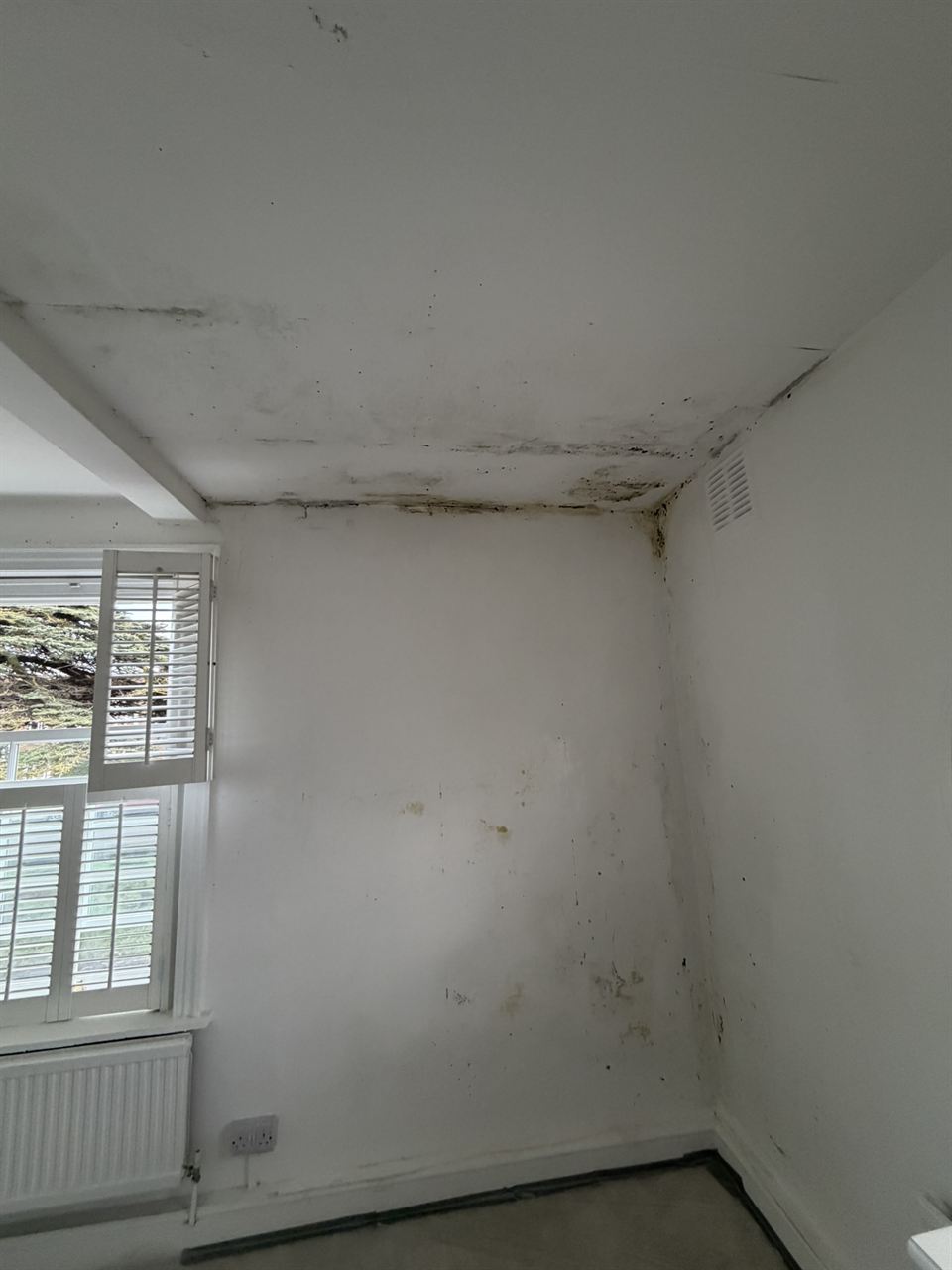
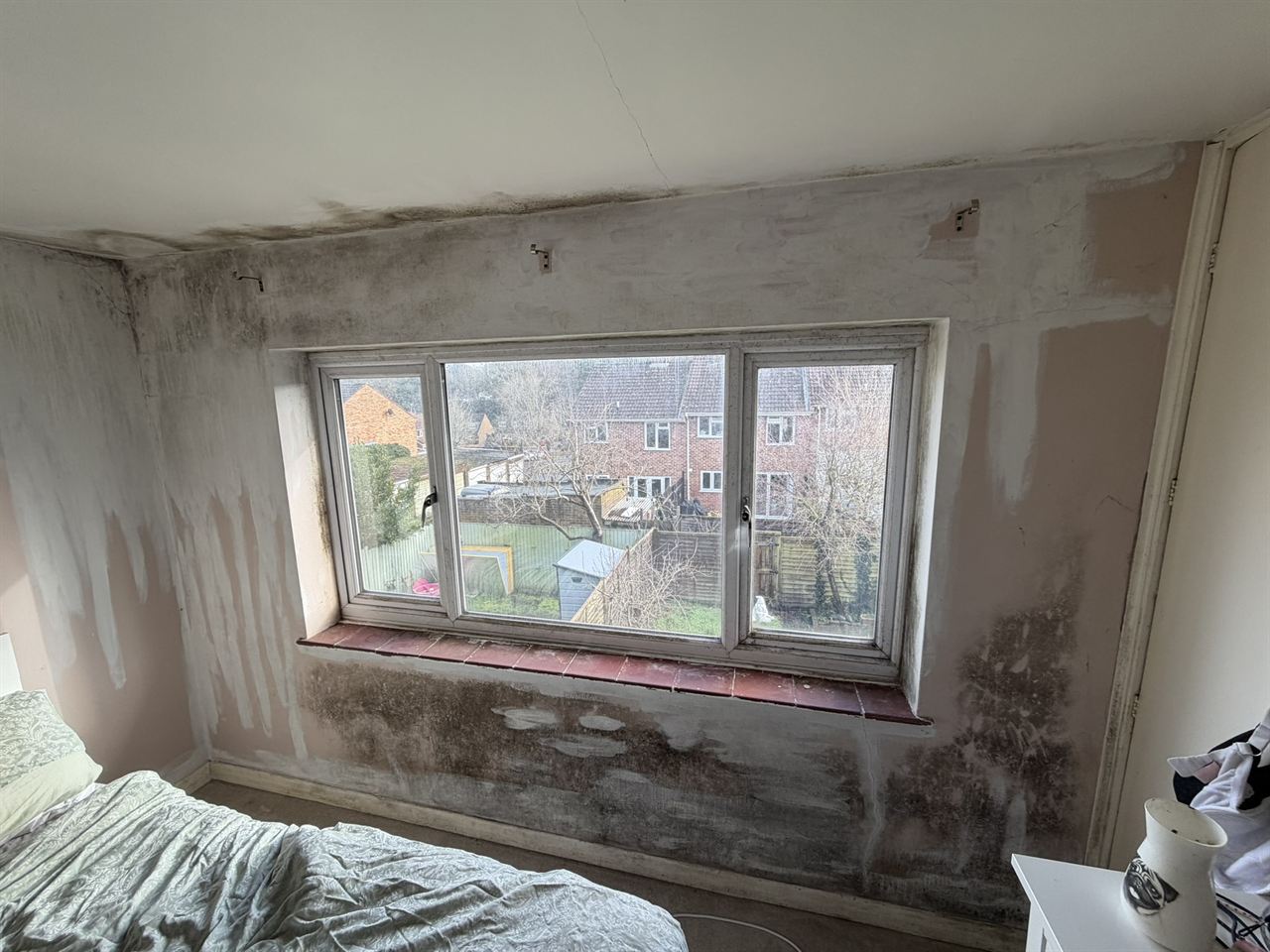
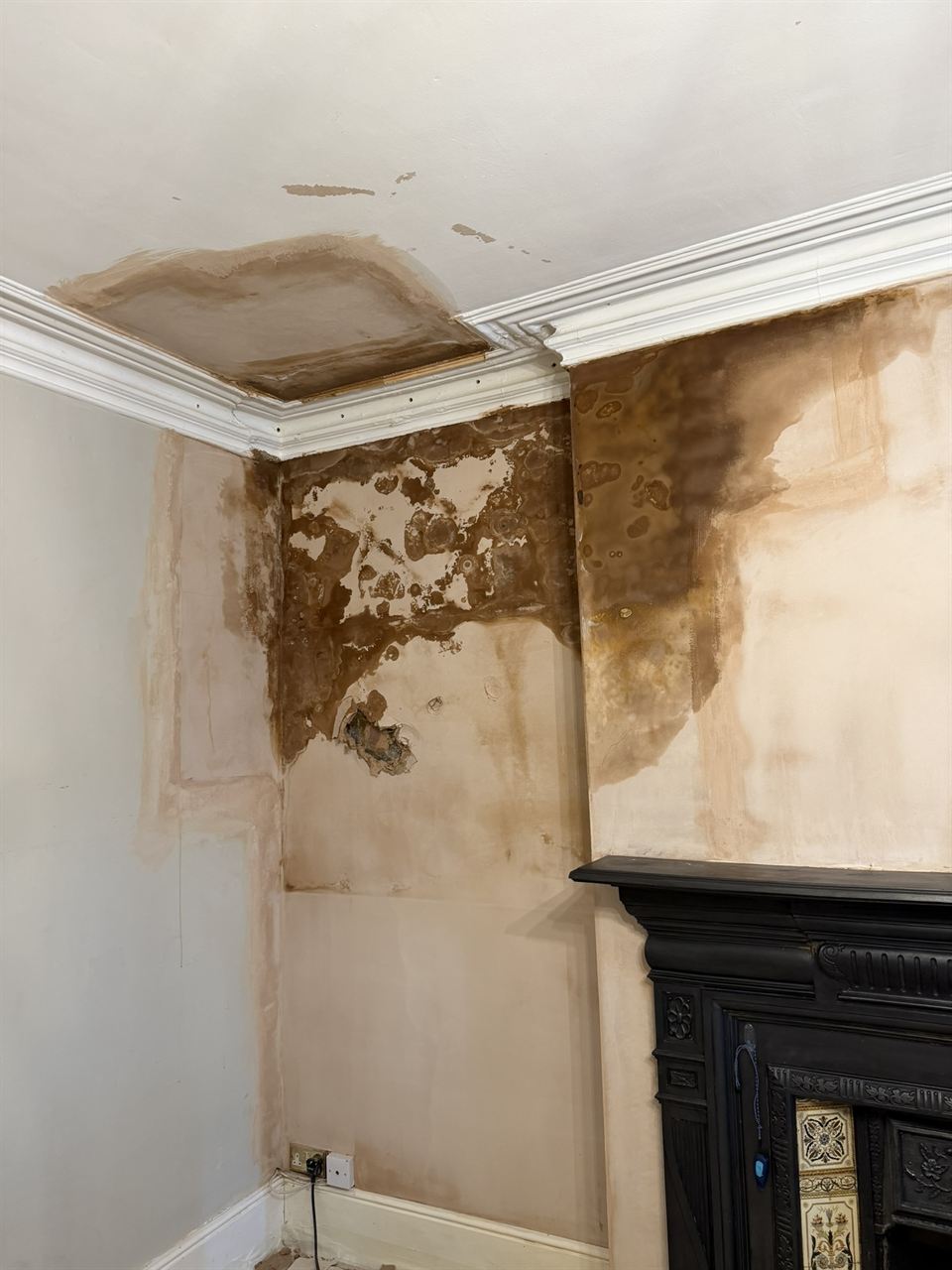
- Stains on ceilings or walls, especially below bathrooms or near pipe runs, that grow or darken over time
- Boiler pressure that keeps dropping, so you have to keep topping it up
- A higher water bill with no change in how you use water
- A musty smell or mould in one specific spot
- Warm or cold patches on the floor, which can point to a leaking heating pipe
- Bubbling paint, lifting flooring or loose tiles
- The sound of running water when nothing is turned on
 Enlarge photo
The water meter test
If you have a water meter, this simple check tells you whether water is escaping somewhere on your supply:
- Turn off every tap, and make sure nothing that uses water is running, including the washing machine, dishwasher and toilet cisterns refilling.
- Note the meter reading, or take a photo of it.
- Wait at least an hour without using any water.
- Check the meter again. If the reading has moved, water is going somewhere it shouldn't.
This test won't pick up leaks from the heating system or waste pipes, which aren't on the metered supply. For those, look for dropping boiler pressure and damp patches.
How professionals find the source
Finding a leak shouldn't mean ripping out a kitchen or a whole ceiling. We use several non-invasive methods to narrow it down first:
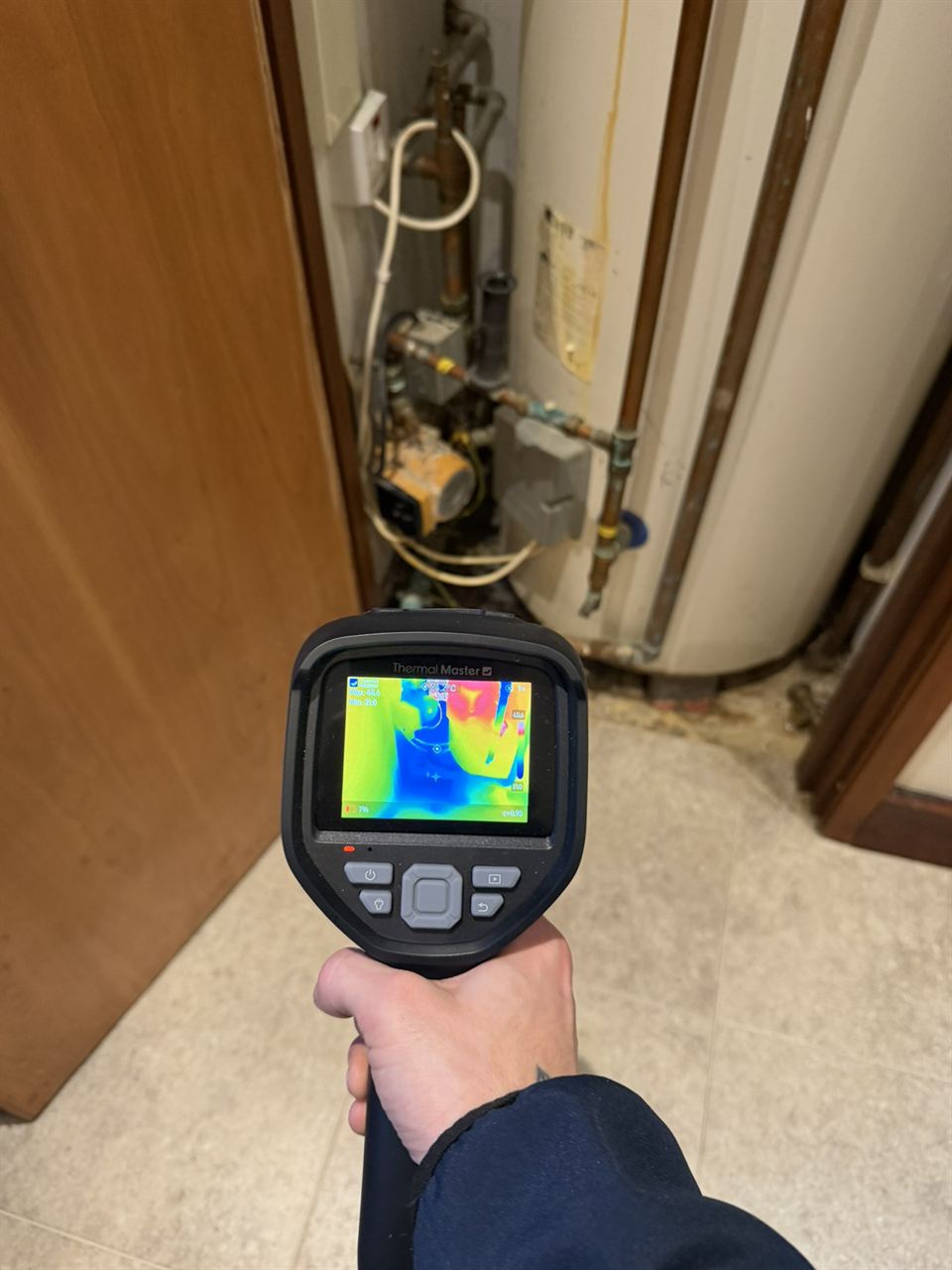
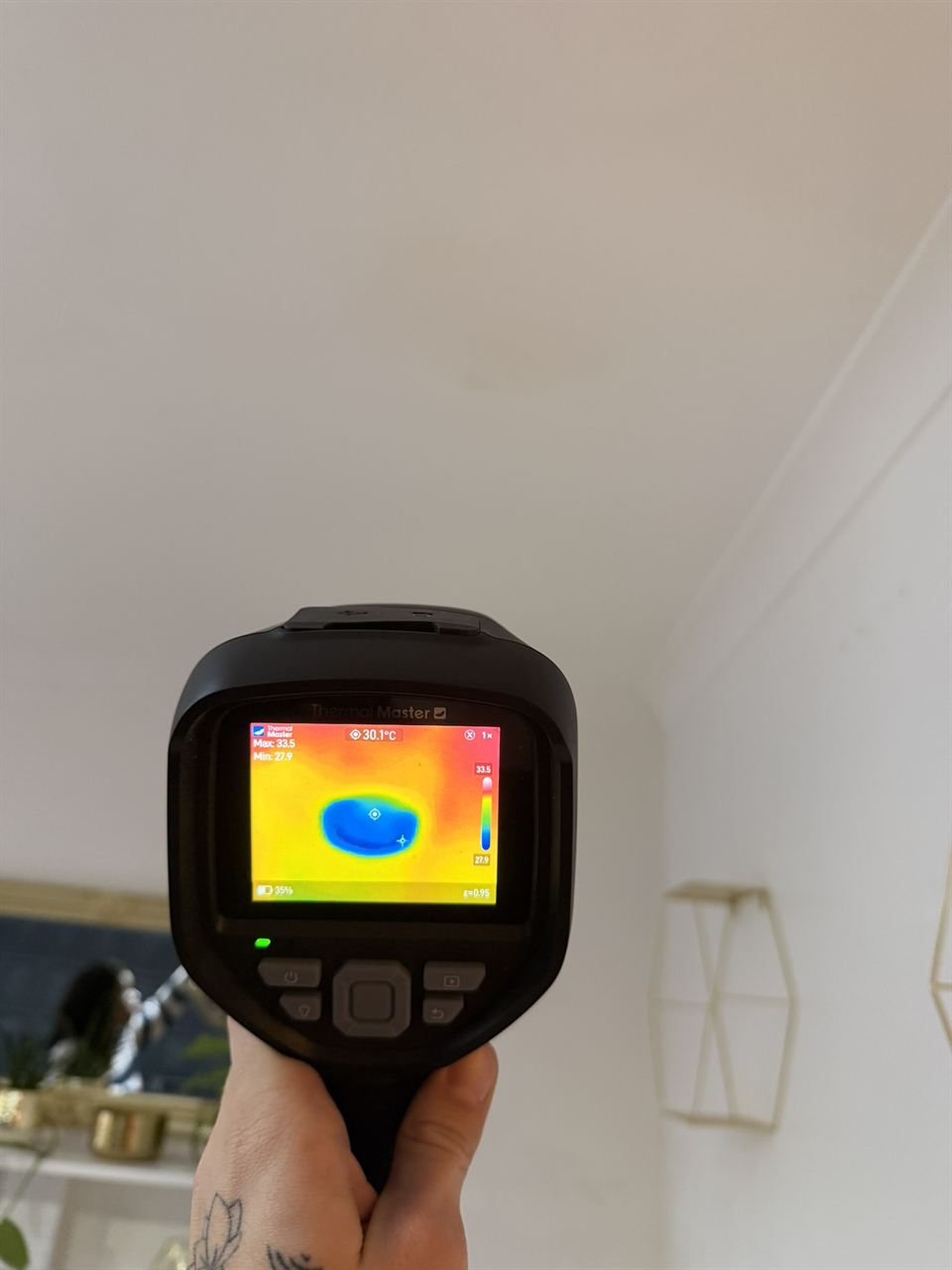
- Thermal imaging shows the temperature patterns escaping water creates inside walls, floors and ceilings.
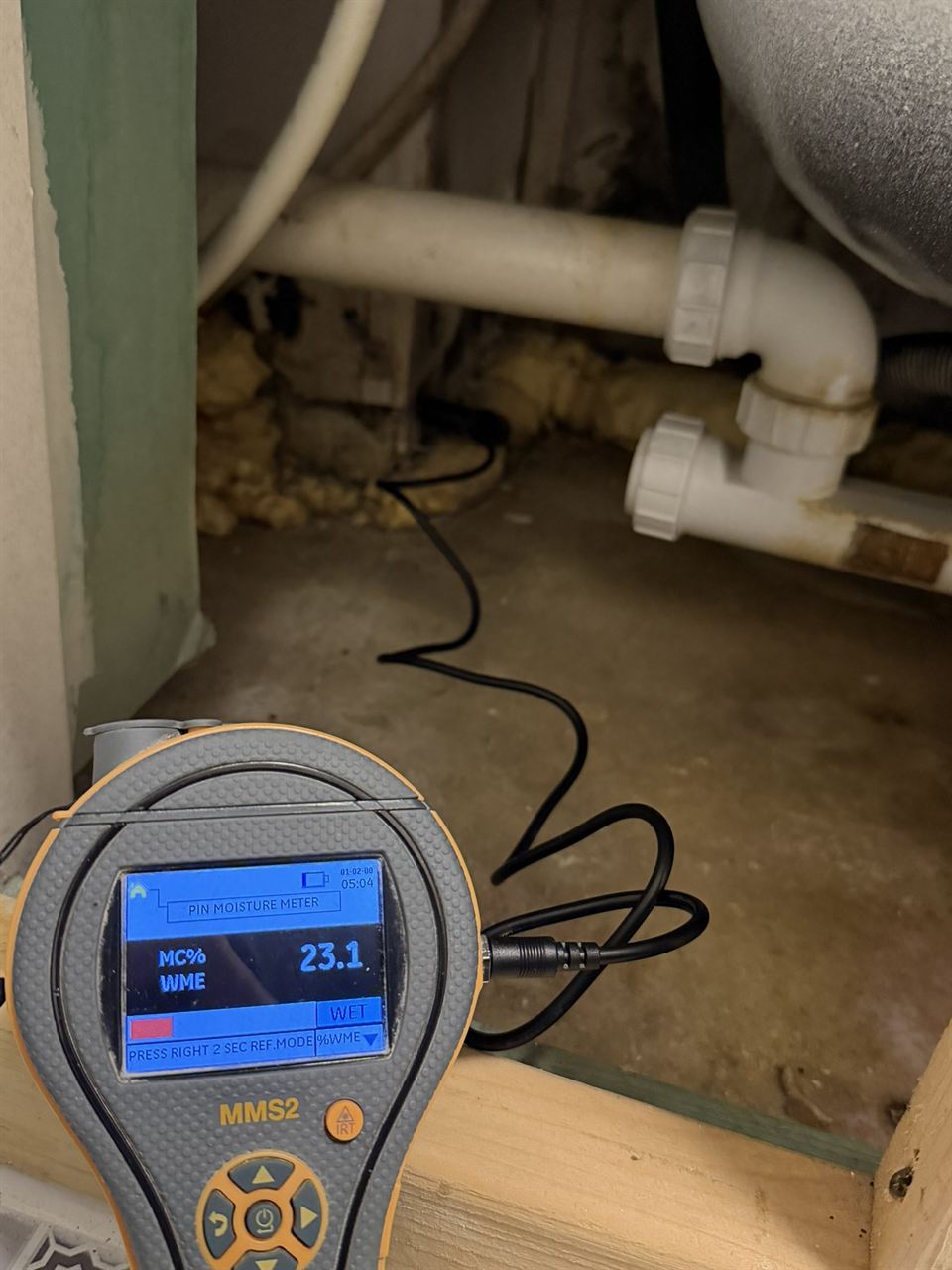
- Moisture mapping with meters shows how far the water has travelled and where it's wettest.
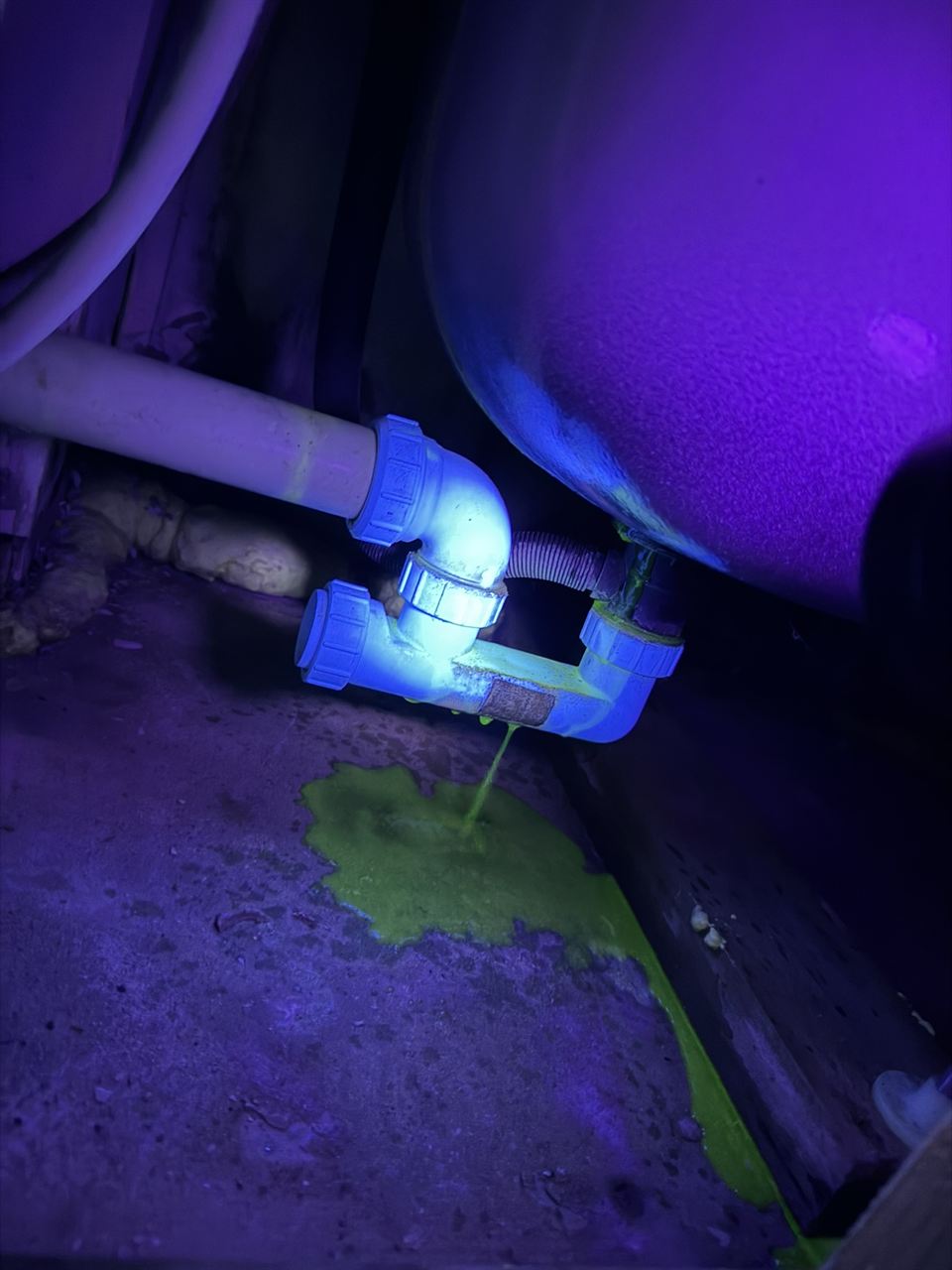
- UV dye testing traces water from baths, showers and waste pipes.
- Borescope cameras let us look inside voids through a tiny hole.
 Enlarge photo
 Enlarge photo
Only once the source is pinpointed do we open up, and then it's one small, targeted section. Through our partner plumbers, we can usually quote for the repair on the spot.
What to do if you suspect a leak
- If water is actively coming through, turn off the water at the stopcock.
- Keep water away from electrics and switch off affected circuits if it's safe to do so.
- Take photos of any damage for your records and your insurer.
- Get the source found quickly. The longer water runs, the more drying and repair is needed.