Key points
- A good survey looks inside and outside the property.
- Readings are taken with instruments, not judged by eye.
- Salt testing and borescope cameras are used where needed.
- You get a written report with the cause and clear recommendations.
A damp survey should answer three questions: where is the moisture, how far has it spread, and what's causing it? Here's what that involves when we carry one out.
1. A conversation first
We start by listening. When did you first notice the problem? Is it worse after rain, in winter or after showers? Has any work been done recently? The answers often point straight towards the likely cause.
2. External inspection
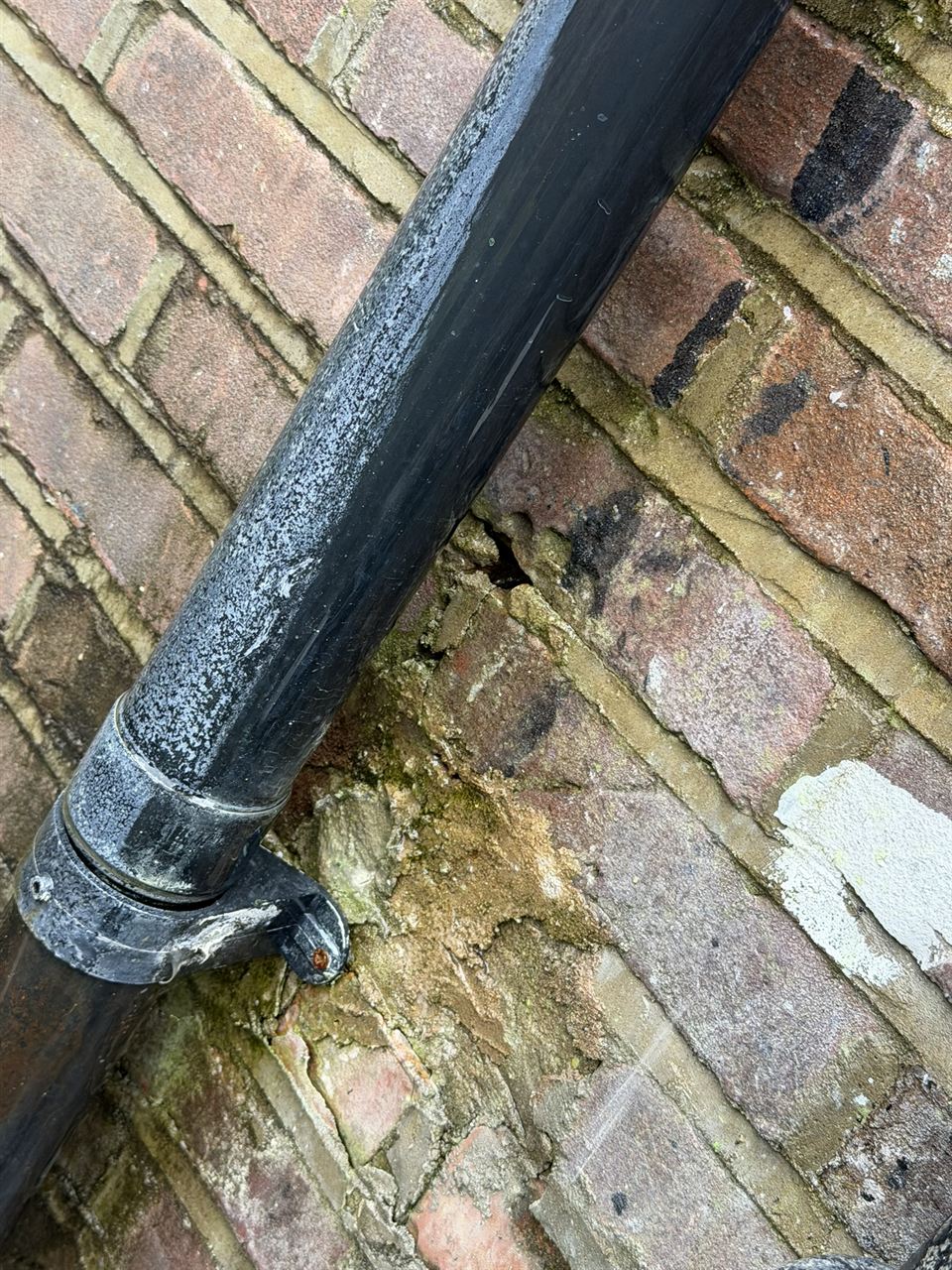
Many damp problems start outside, so we check gutters, downpipes, brickwork, pointing, render, ground levels and anything else that could be letting water into the walls.
 Enlarge photo
3. Moisture readings
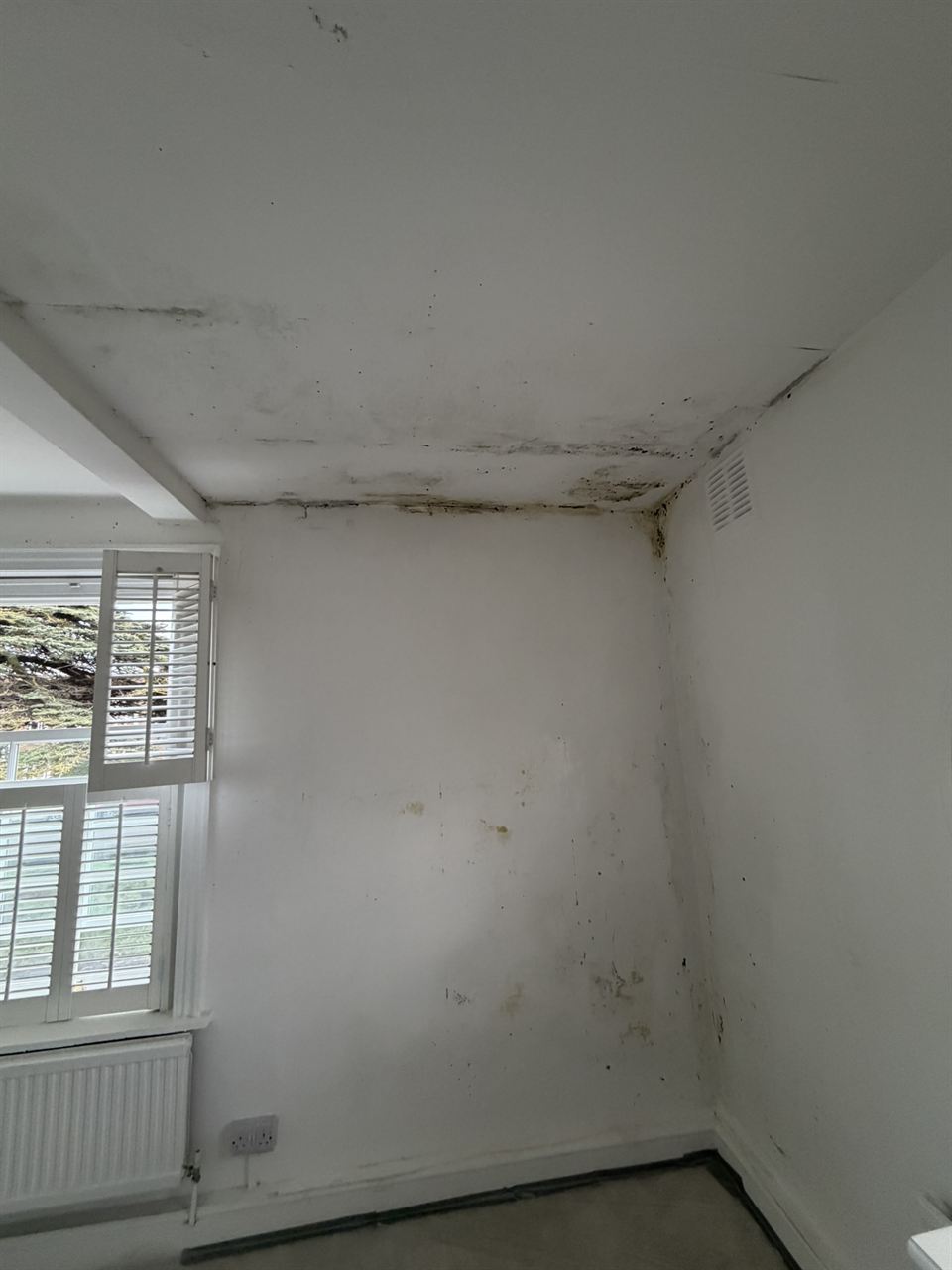
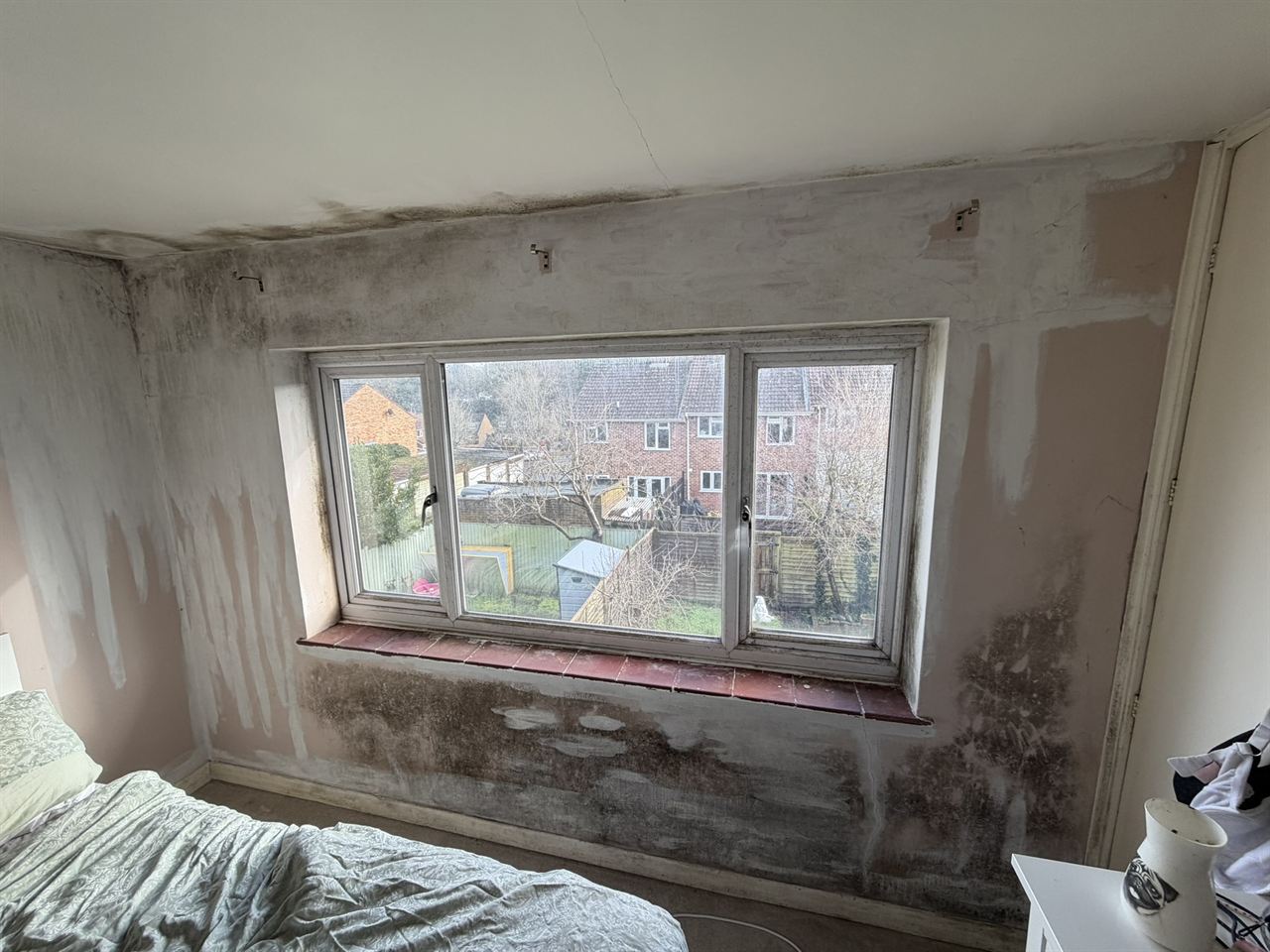
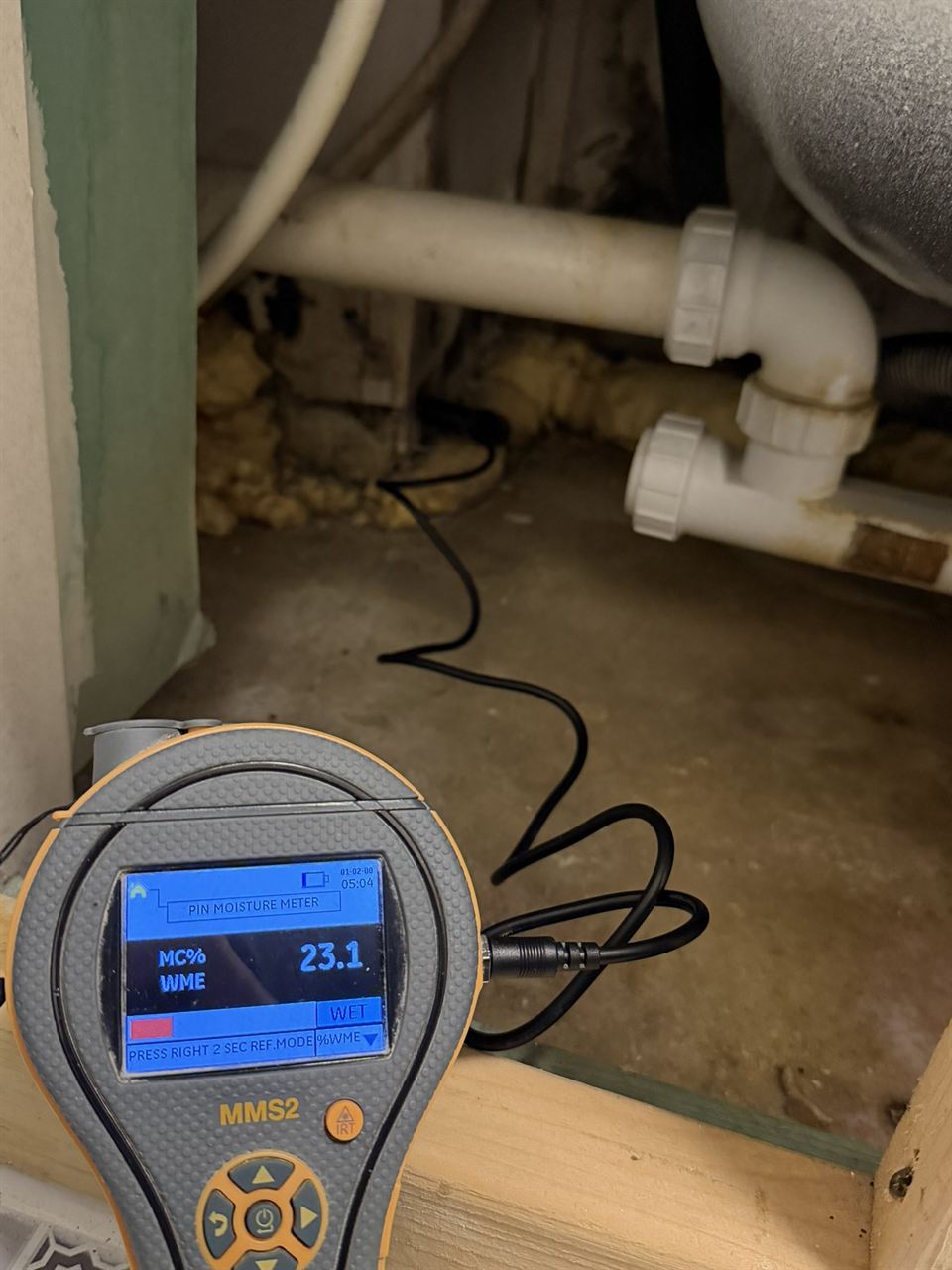
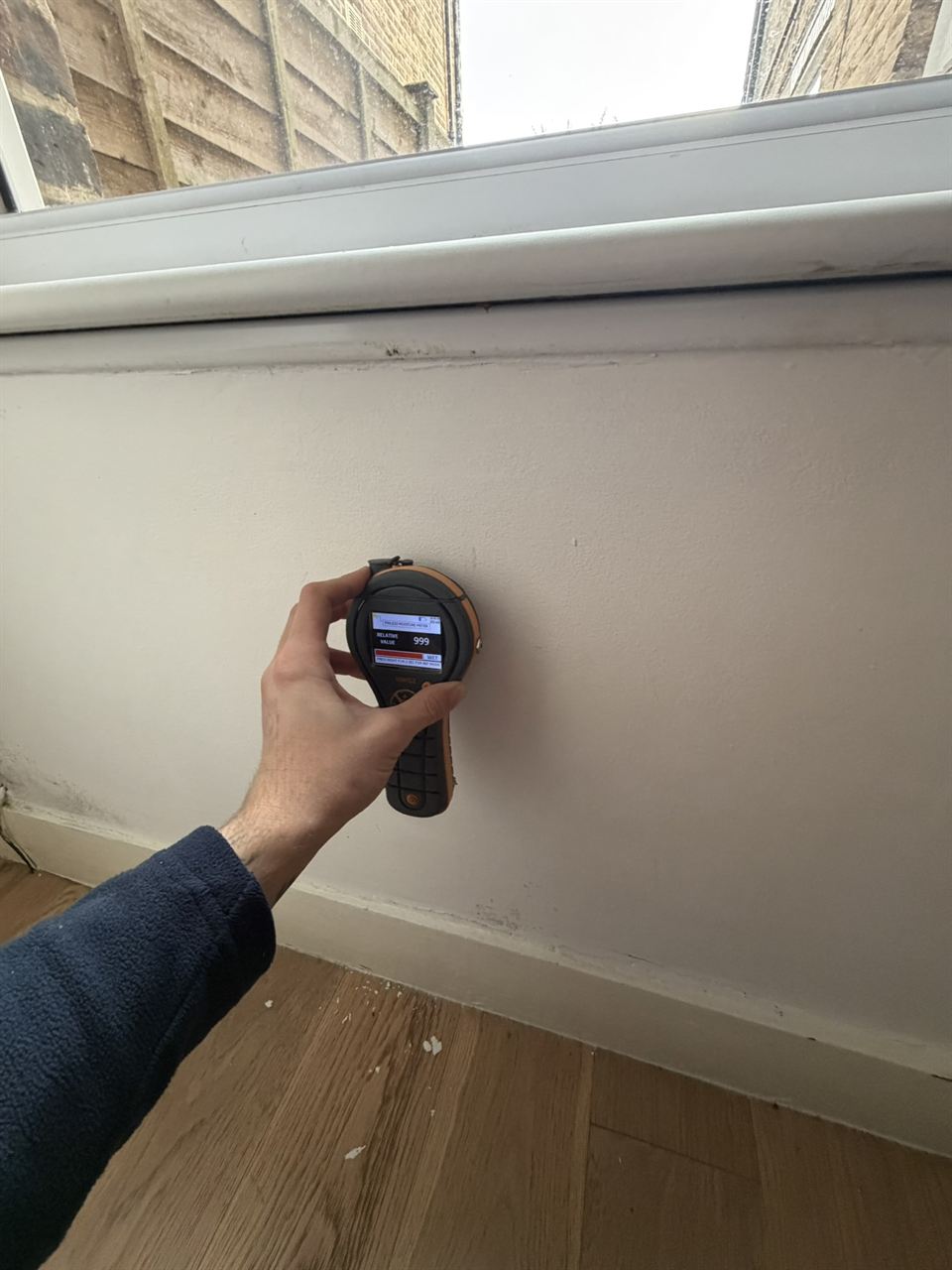
We take readings room by room with electronic moisture meters, mapping where moisture is and how high it reaches. The pattern of readings tells us a lot: surface moisture suggests condensation, while readings that rise towards a specific point suggest a leak or penetrating damp.
 Enlarge photo
4. Thermal imaging
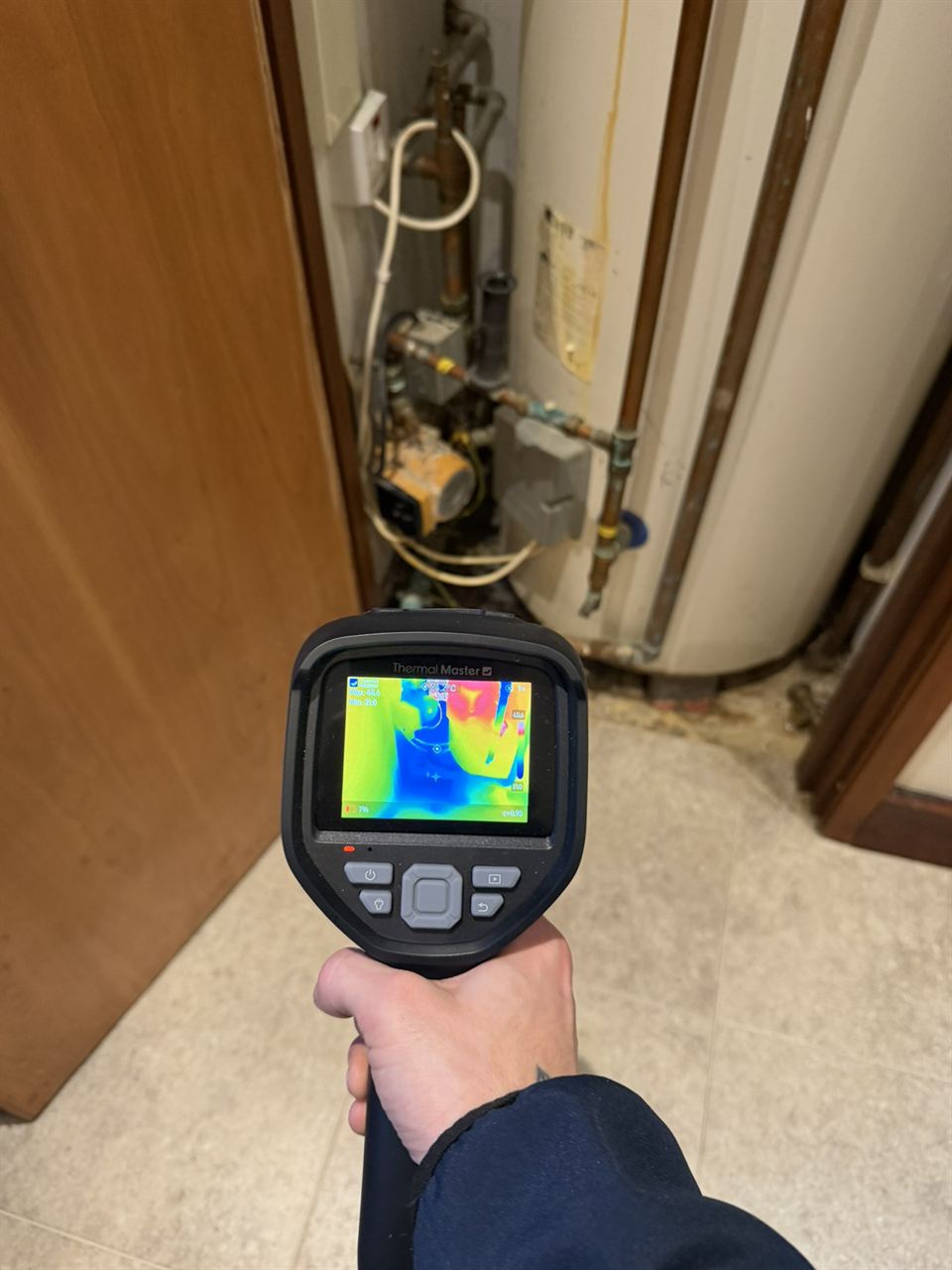
A thermal camera shows temperature differences across walls, floors and ceilings. Wet materials and leaking pipes show up as distinct patterns, as do cold bridges and missing insulation that cause condensation.
5. Humidity and dew point
A hygrometer measures temperature, relative humidity and dew point. This tells us whether the air in the property is moist enough to cause condensation, and how well the property is ventilated.
6. Salt testing and borescope inspections where needed
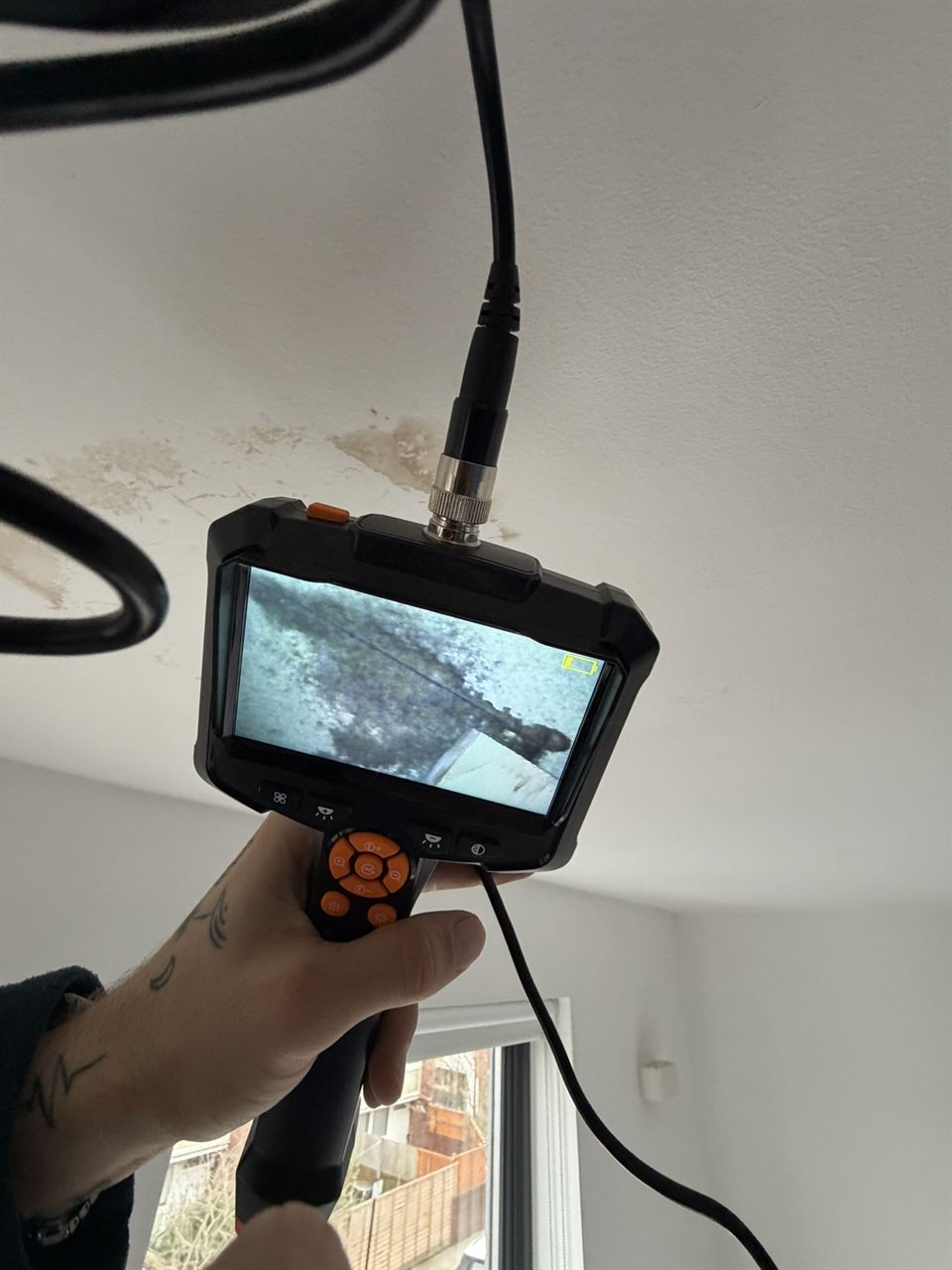
If rising damp is suspected, salt testing confirms whether hygroscopic salts are present in the wall. Where we need to see inside a wall cavity or floor void, a borescope camera lets us look through a tiny hole instead of opening up.
 Enlarge photo
7. Your report
You receive a written report with photos, readings, our conclusions on the cause and clear recommendations. It's yours to use for your own records, a landlord, a buyer, a builder or your insurer.
How much does a damp survey cost?
Every property is different, so we confirm the price before booking. Our surveys are offered at competitive rates, and if we can advise from photos without a survey, we'll tell you.