Key points
- Landlords must keep the structure, exterior and water and heating installations in repair.
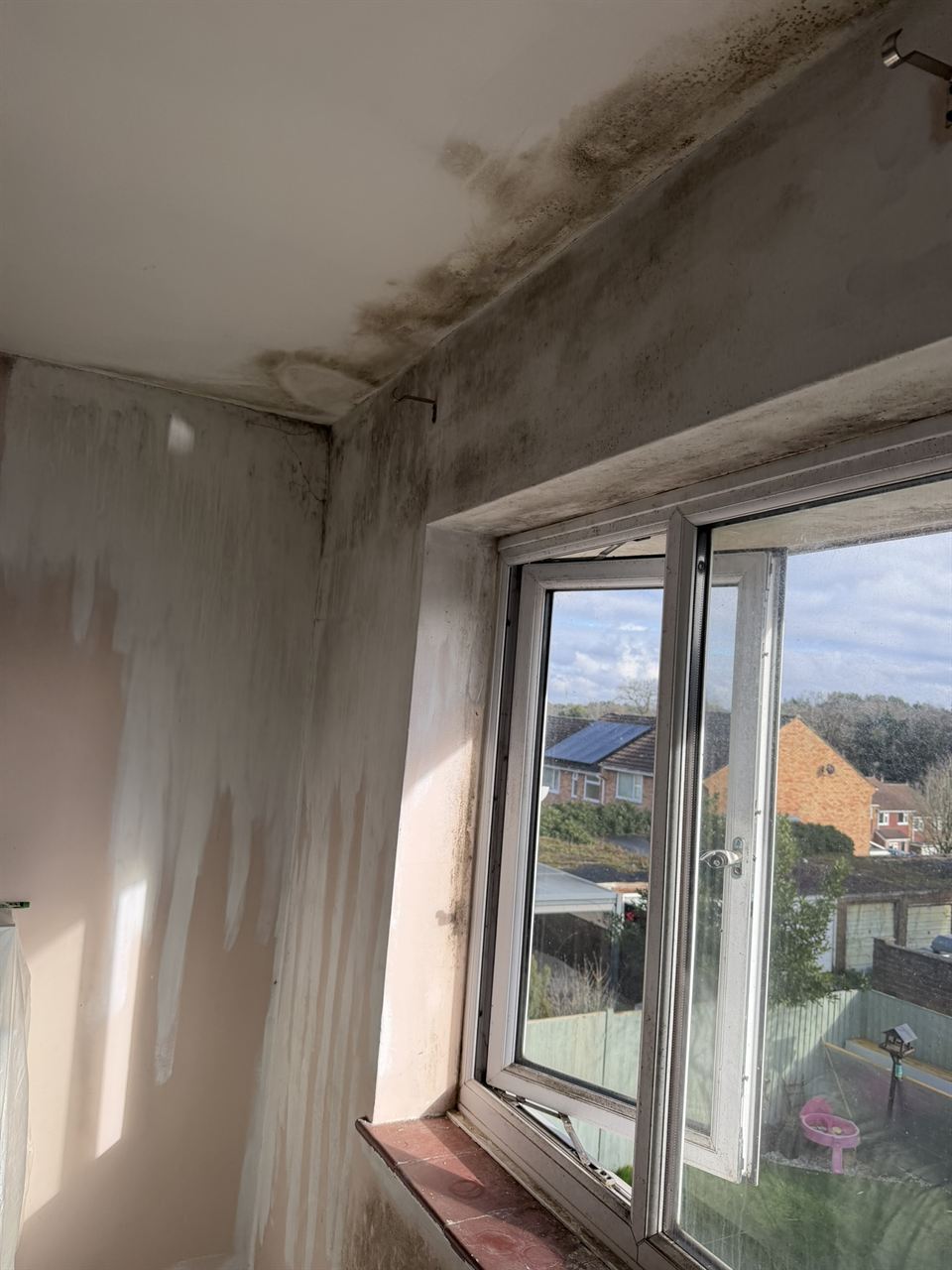
- Rented homes must be fit to live in, and serious damp and mould can make a home unfit.
- Tenants are expected to ventilate, heat reasonably and report problems promptly.
- An independent survey shows what's really causing the mould, which settles most disputes.
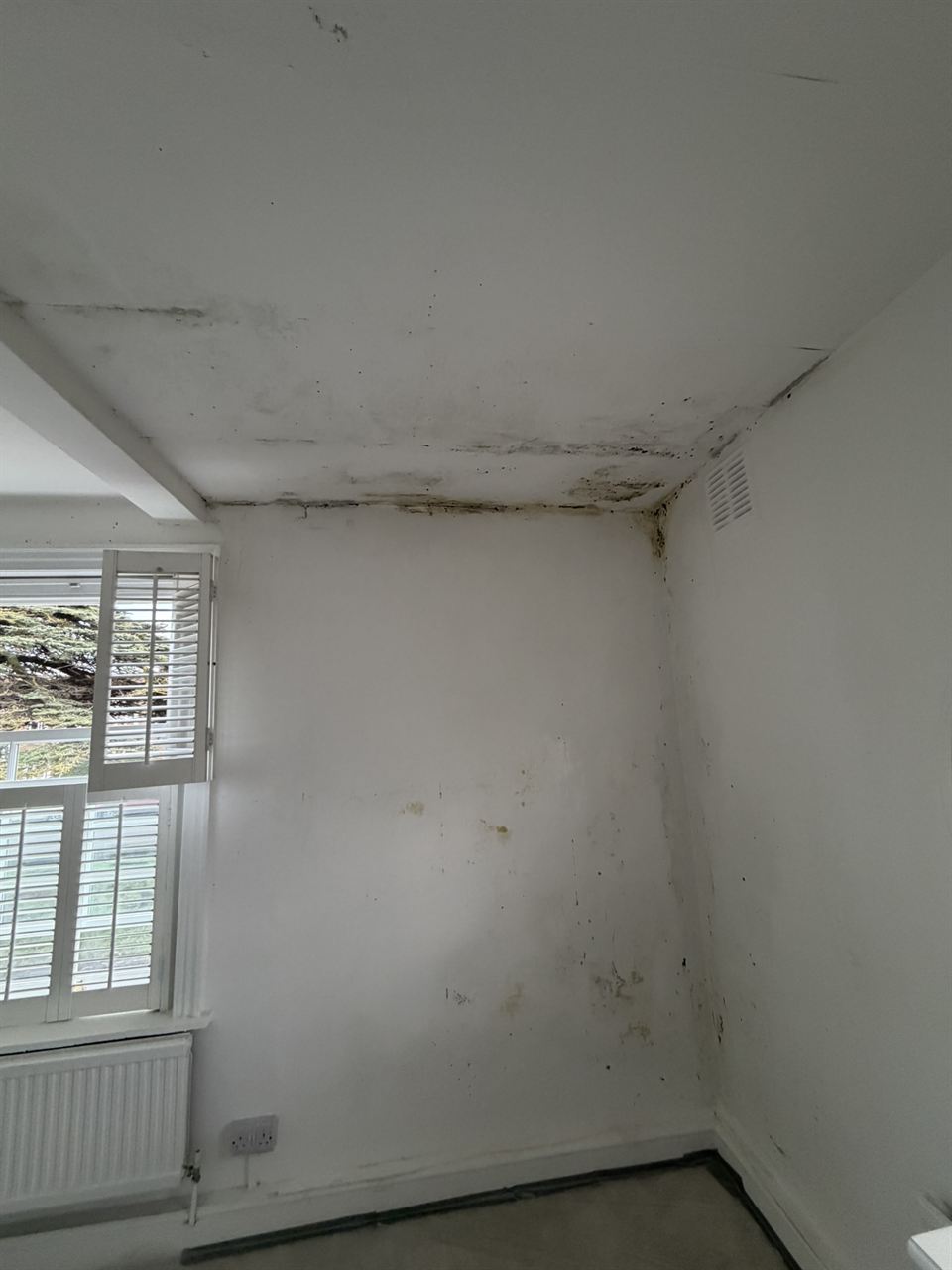
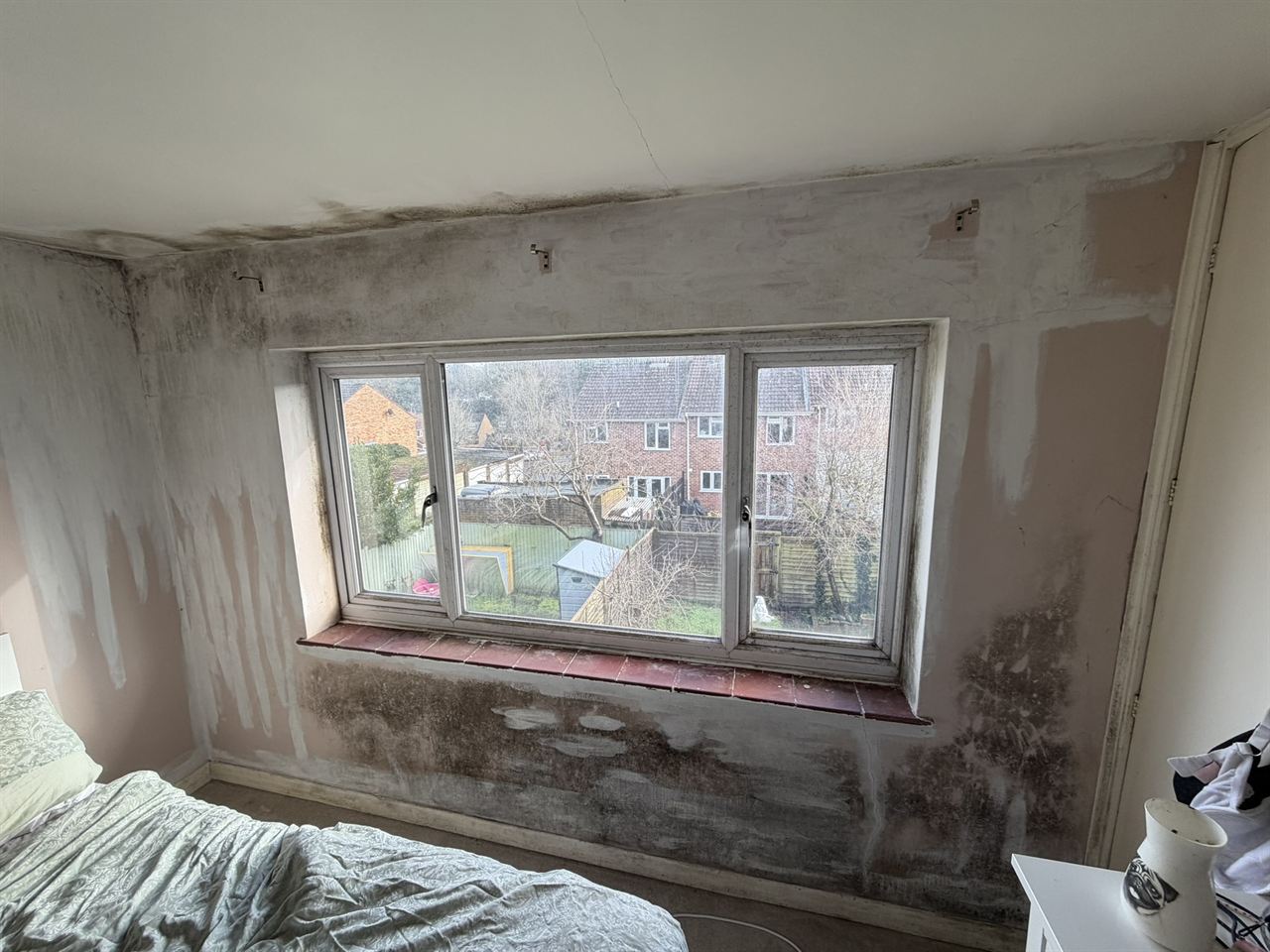
Mould is one of the most common causes of disagreement between tenants and landlords. Tenants are told it's "lifestyle condensation"; landlords are told it's a building defect. Often nobody actually knows, because nobody has measured anything.
This guide covers the general position in England. It isn't legal advice. If you're in a dispute, organisations such as Shelter, Citizens Advice and your local council can help.
What landlords are responsible for
Under the Landlord and Tenant Act 1985, landlords must keep in repair the structure and exterior of the property, including roofs, walls, gutters, drains and windows, and the installations for water, heating and sanitation. Damp caused by a leaking pipe, a defective roof, broken gutters or failed brickwork is a repair issue for the landlord.
The Homes (Fitness for Human Habitation) Act 2018 also requires rented homes to be fit to live in at the start of and throughout a tenancy. Serious damp and mould can make a home unfit, and tenants can take action if it isn't dealt with.
Councils can also inspect rented homes for hazards, including damp and mould growth, and require landlords to fix them.
 Enlarge photo
What tenants are responsible for
Tenants are expected to look after the property in a "tenant-like manner". In practice, that means:
- Using extractor fans and opening windows when cooking, showering and drying clothes
- Keeping the home reasonably heated
- Not blocking vents or trickle vents
- Reporting leaks, damp and mould to the landlord promptly, ideally in writing with photos
Awaab's Law
Awaab's Law, named after two-year-old Awaab Ishak who died after exposure to mould in his family's social housing flat, now requires social landlords in England to investigate and fix damp and mould hazards within strict timescales. The Renters' Rights Act gives the government the power to apply similar requirements to private landlords. Either way, the direction is clear: damp and mould must be taken seriously and dealt with quickly.
Condensation or defect? Why evidence matters
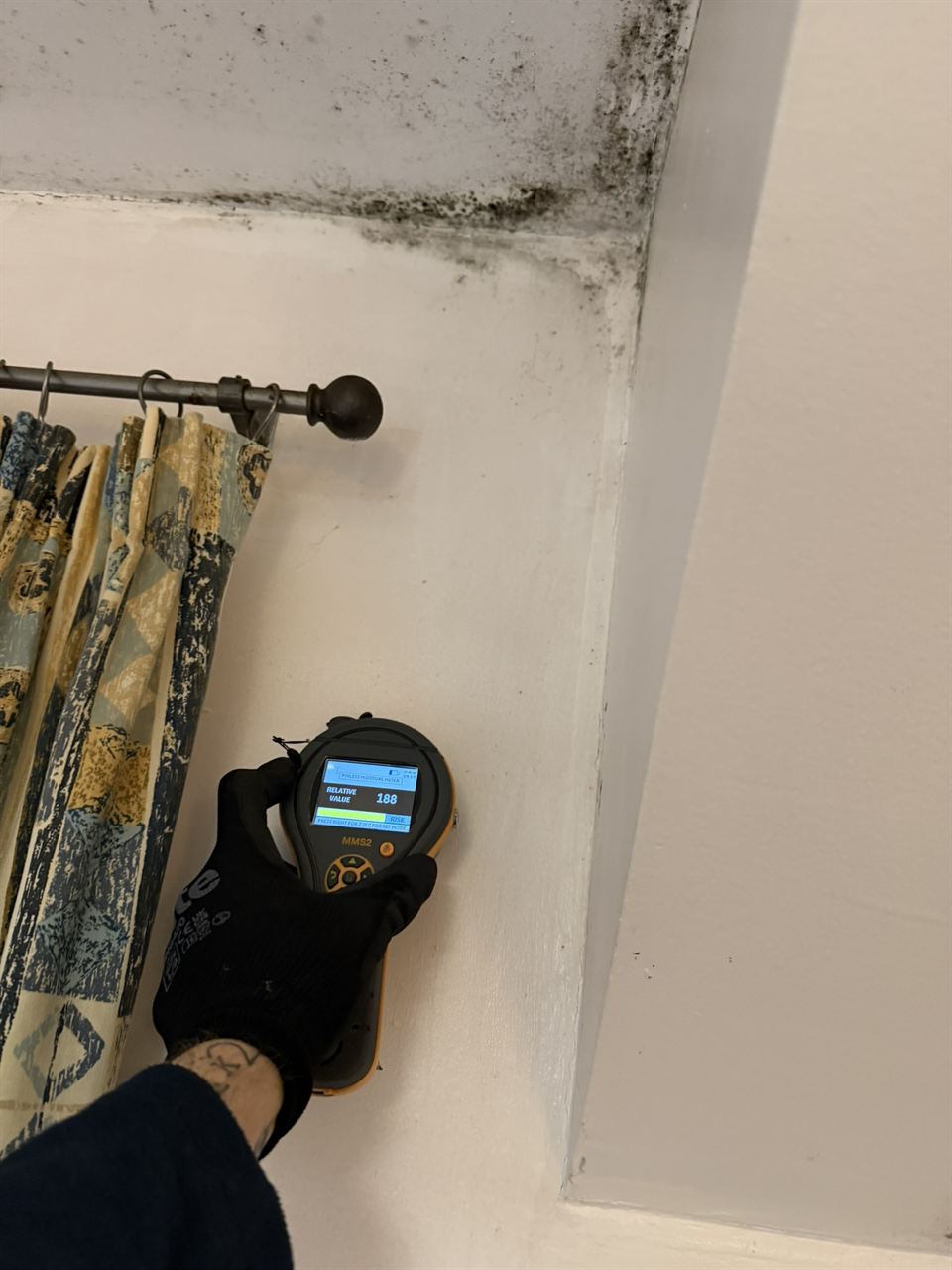
Most disputes come down to one question: is the mould caused by how the home is used, or by something wrong with the building? The two can look identical. A proper assessment answers it with evidence:
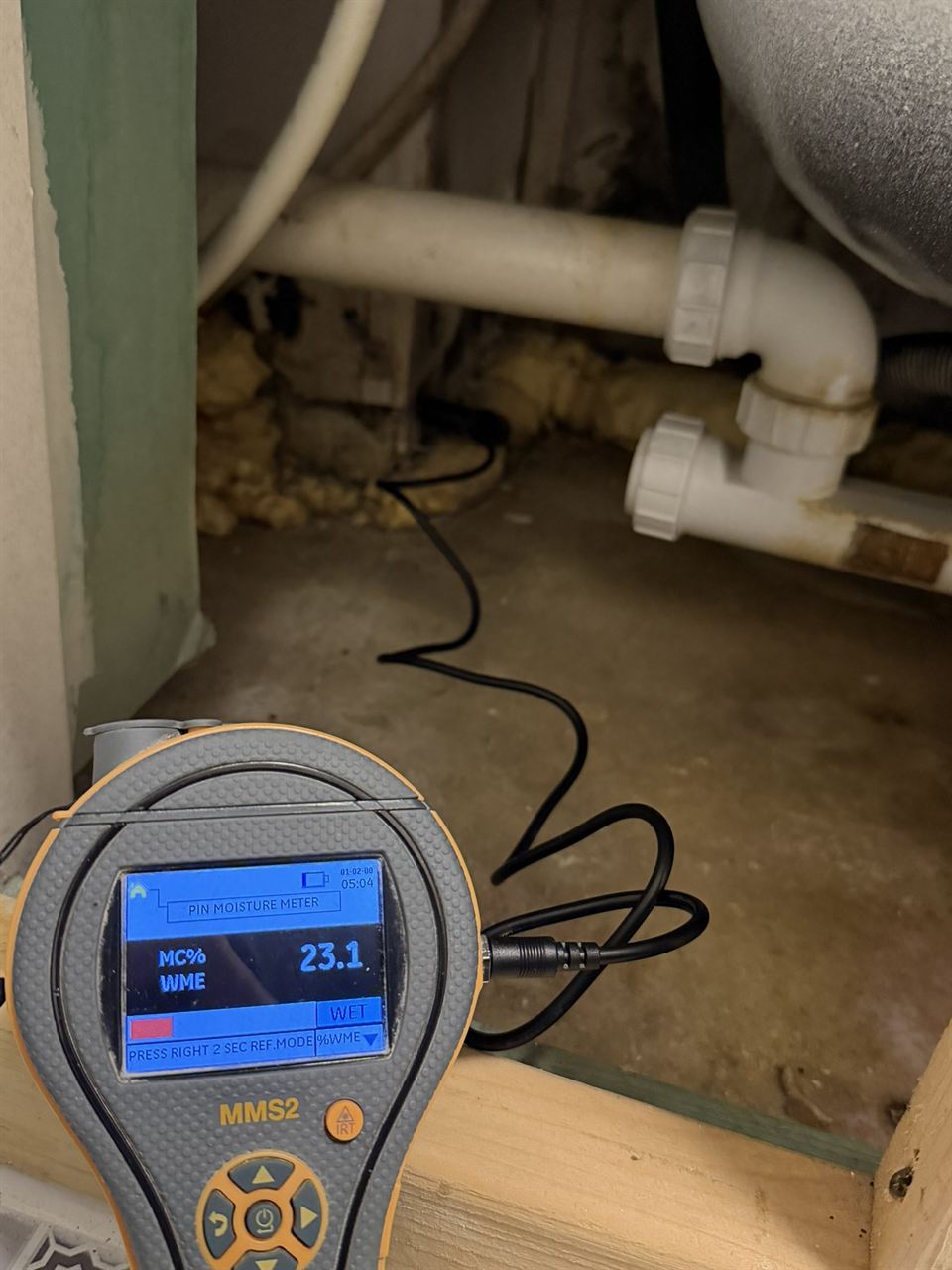
- Moisture meter readings show whether walls are wet from within (a leak or penetrating damp) or only on the surface (condensation).
- Humidity and dew point readings show whether the air is moist enough to cause condensation.
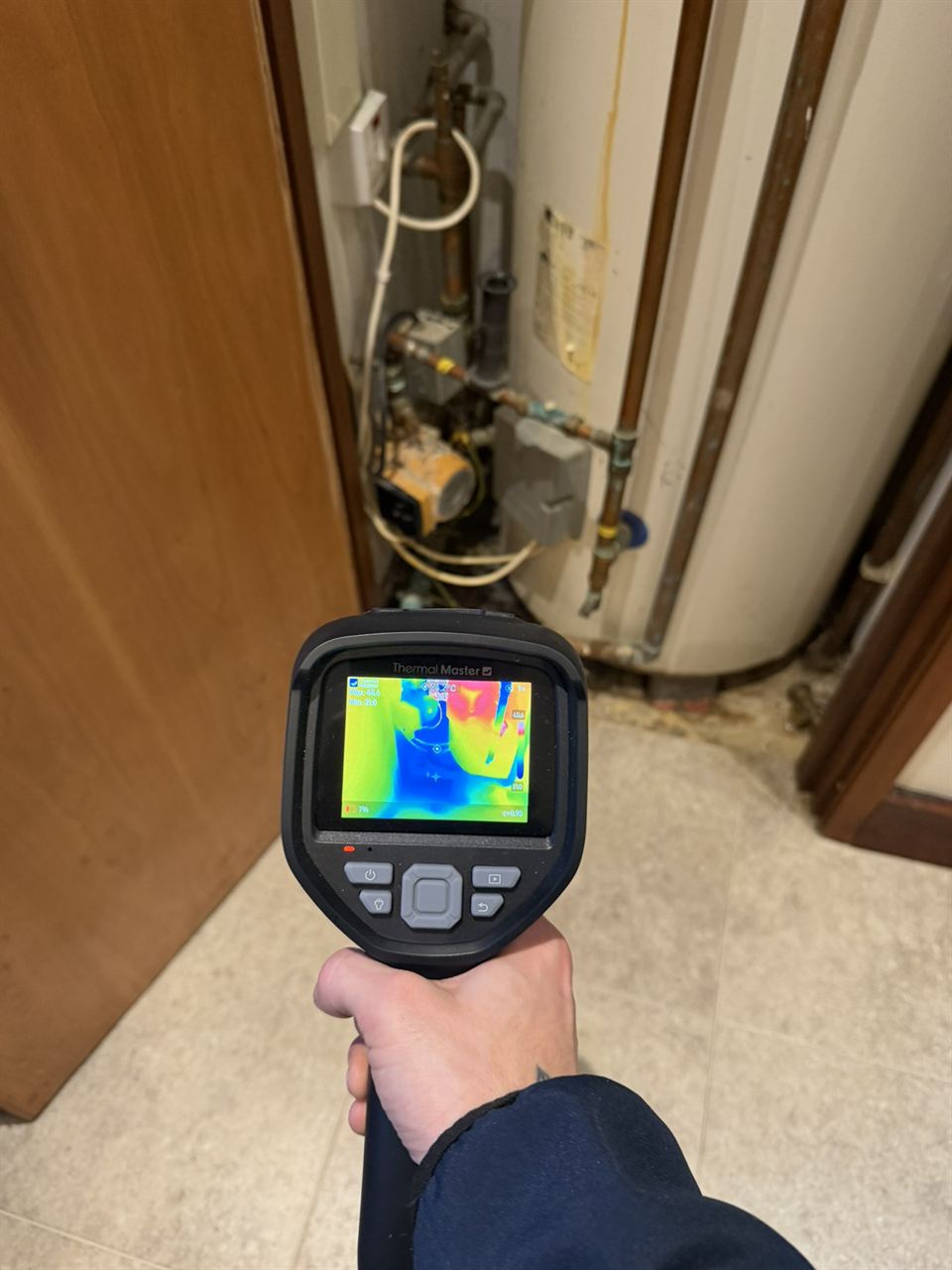
- Thermal imaging shows cold spots, missing insulation and hidden leaks.
- An external inspection checks gutters, downpipes and brickwork for defects letting water in.
 Enlarge photo
Often the answer is a combination, such as a cold wall made worse by poor ventilation, and the report sets out what needs doing by whom.
Getting it sorted
We work with tenants, landlords and letting agents. Our assessment explains the cause of the mould in plain English, backed by readings and photos, and we can remove and treat the mould once the cause is understood.