Key points
- Condensation is the most common cause of damp and mould in UK homes, especially in winter.
- Penetrating damp comes from outside and often gets worse after rain.
- Rising damp is less common than people think and should be confirmed by testing.
- Leaks cause localised damp that can appear at any time of year.
"Damp" is used to describe several very different problems. Getting the diagnosis right matters, because the fix for condensation is completely different from the fix for a leak or rising damp. Treat the wrong one and the problem comes straight back.
1. Condensation
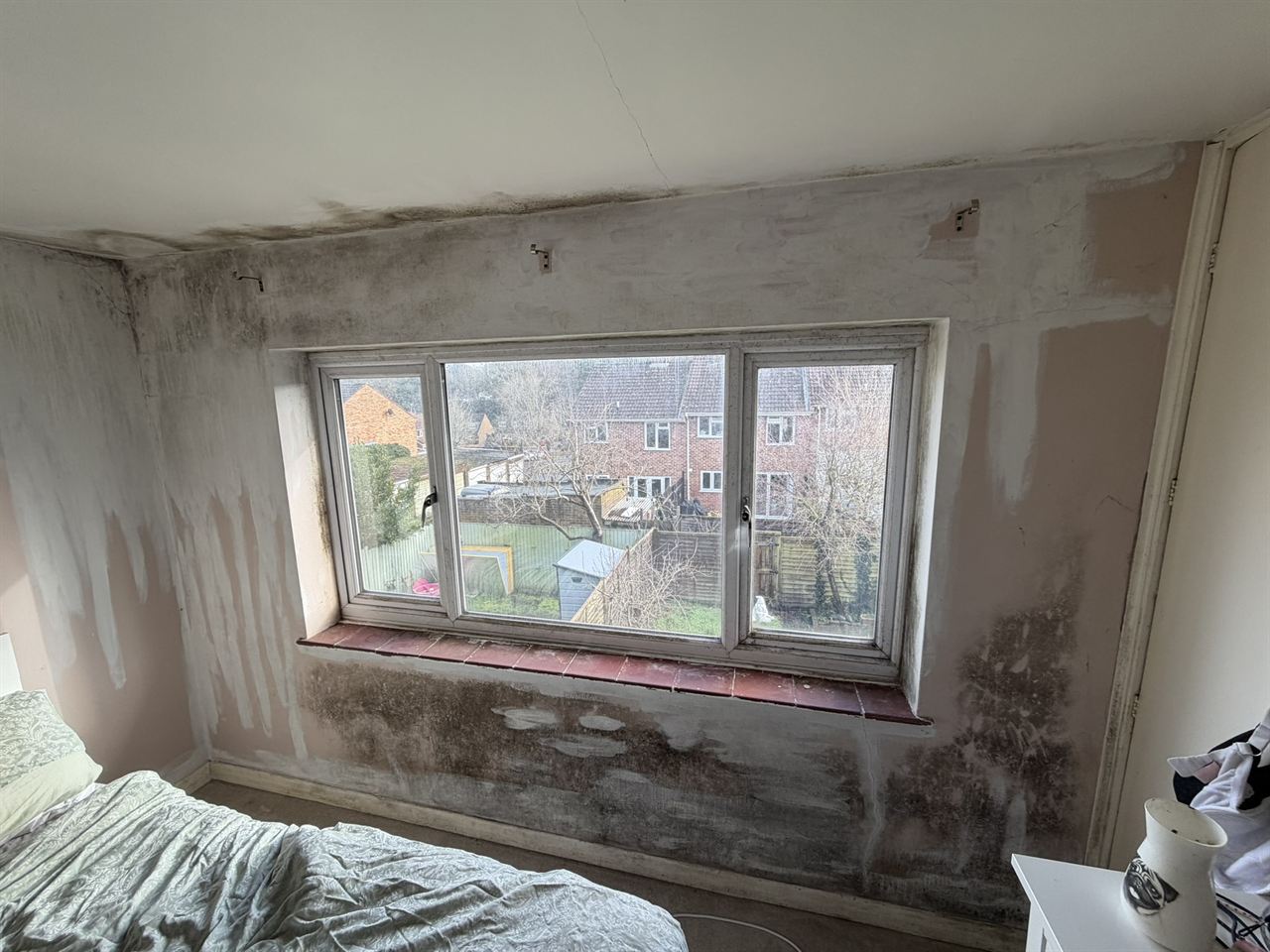
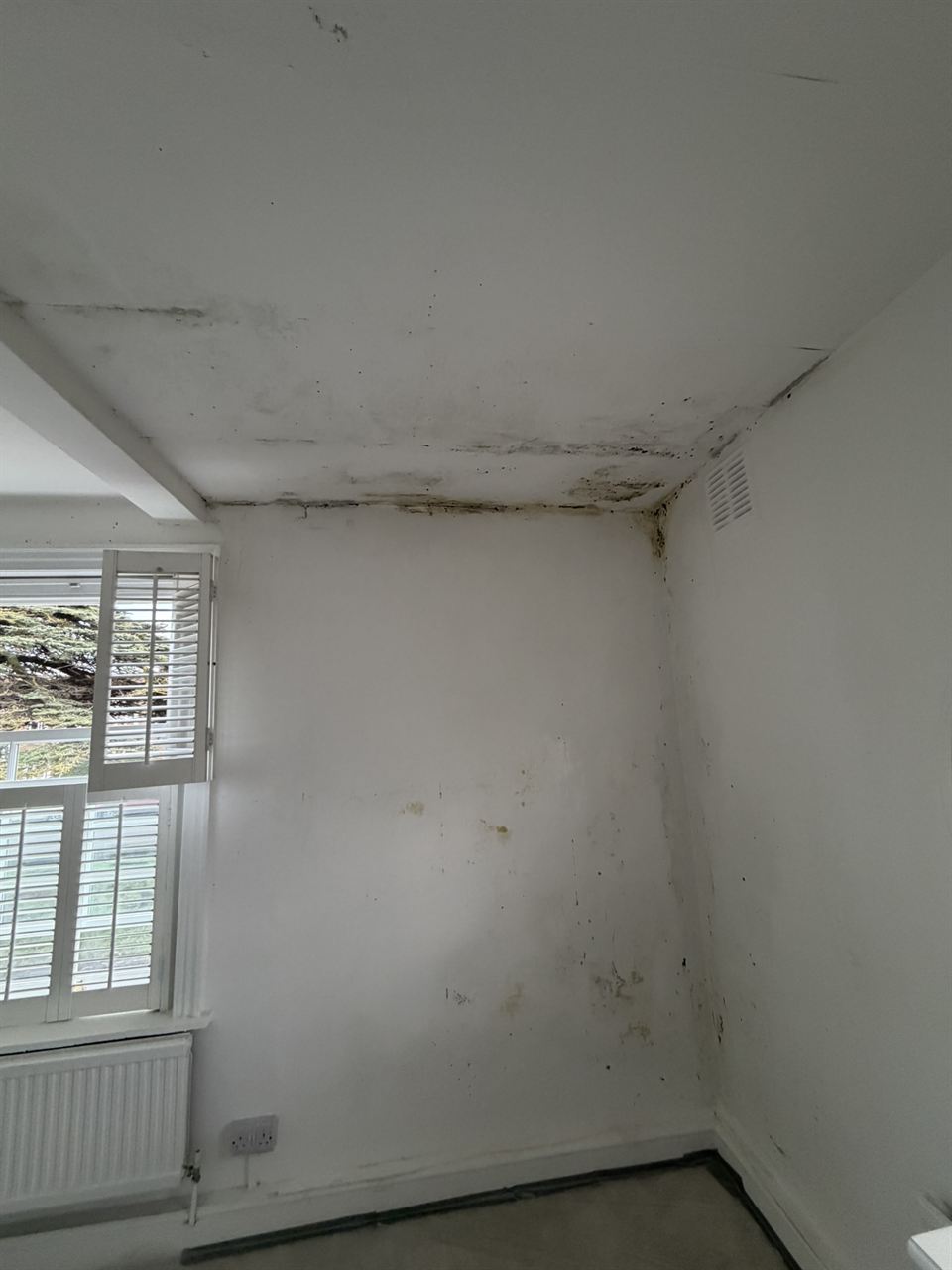
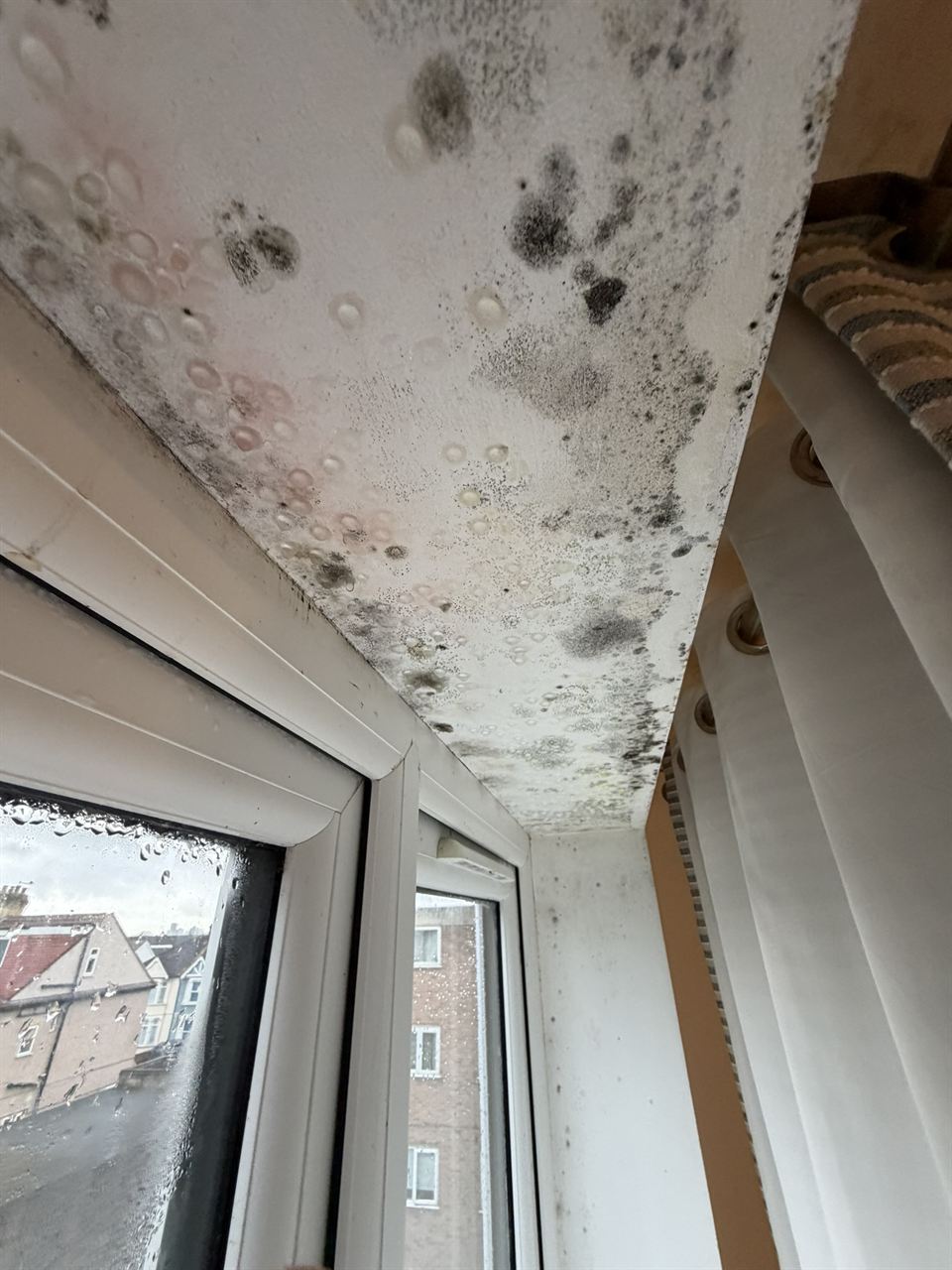
Condensation happens when warm, moist air from cooking, showering, drying clothes and breathing meets a cold surface and turns back into water. It is the most common cause of damp and black mould in UK homes.
Typical signs:
- Water droplets on windows, especially in the morning
- Black mould spots in corners, around windows and behind furniture
- Worse in winter and in bedrooms, bathrooms and kitchens
- Patches on cold external walls rather than one specific spot
 Enlarge photo
What helps: use extractor fans when cooking and showering, keep trickle vents open, dry clothes outside or in a vented dryer, keep the heating at a steady low level rather than short bursts, and leave a small gap between furniture and external walls.
2. Penetrating damp
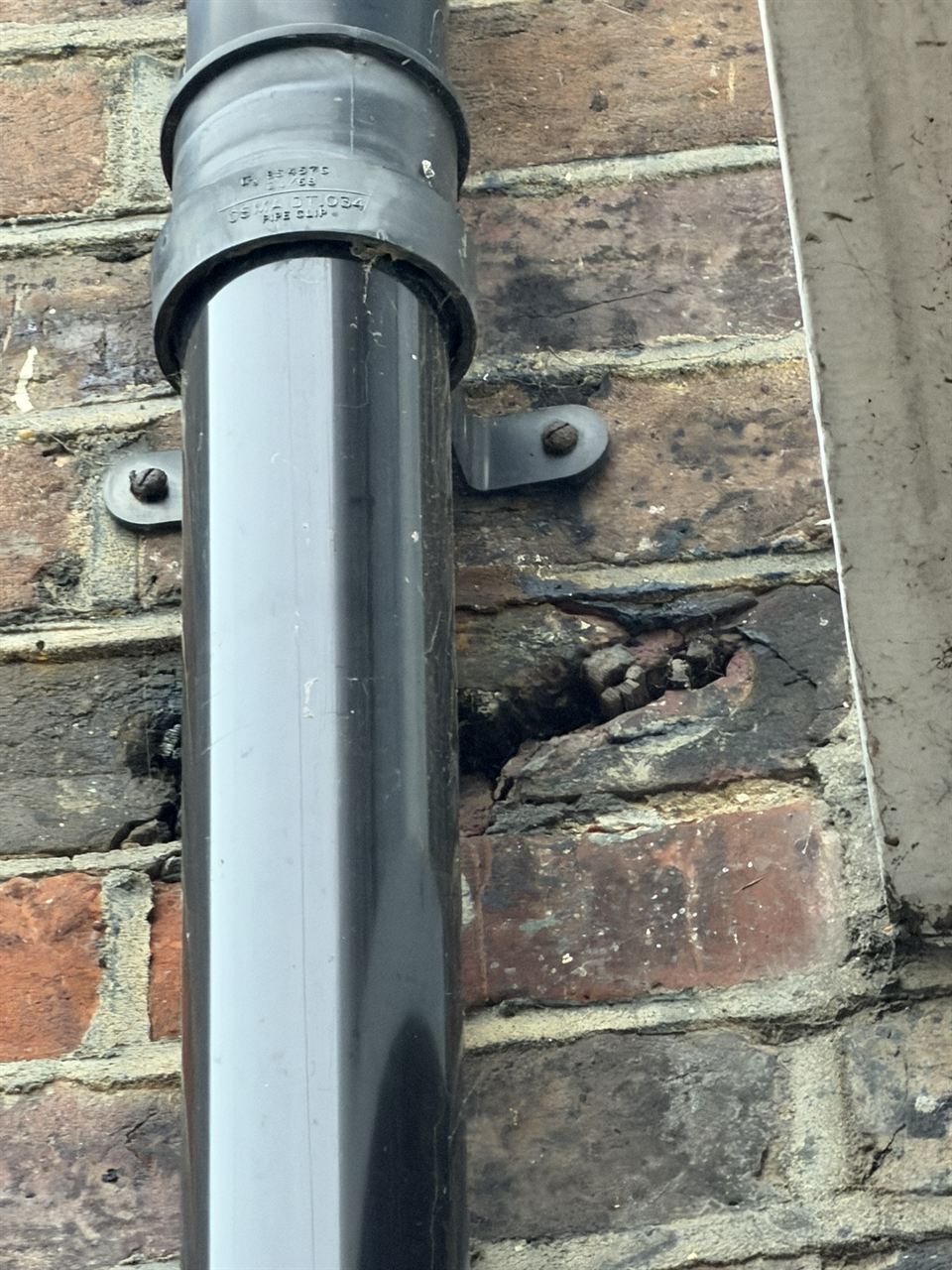
Penetrating damp is water getting in from outside through a defect in the building: cracked or blocked gutters and downpipes, failed pointing, damaged brickwork or render, roof problems or poor window seals.
Typical signs:
- Damp patches on external walls that grow or darken after rain
- Damage that lines up with something outside, such as a gutter joint or downpipe
- Stained or crumbling plaster in one area
 Enlarge photo
The fix is outside: repair the defect, then let the wall dry. That's why our surveys always include an external inspection.
3. Rising damp
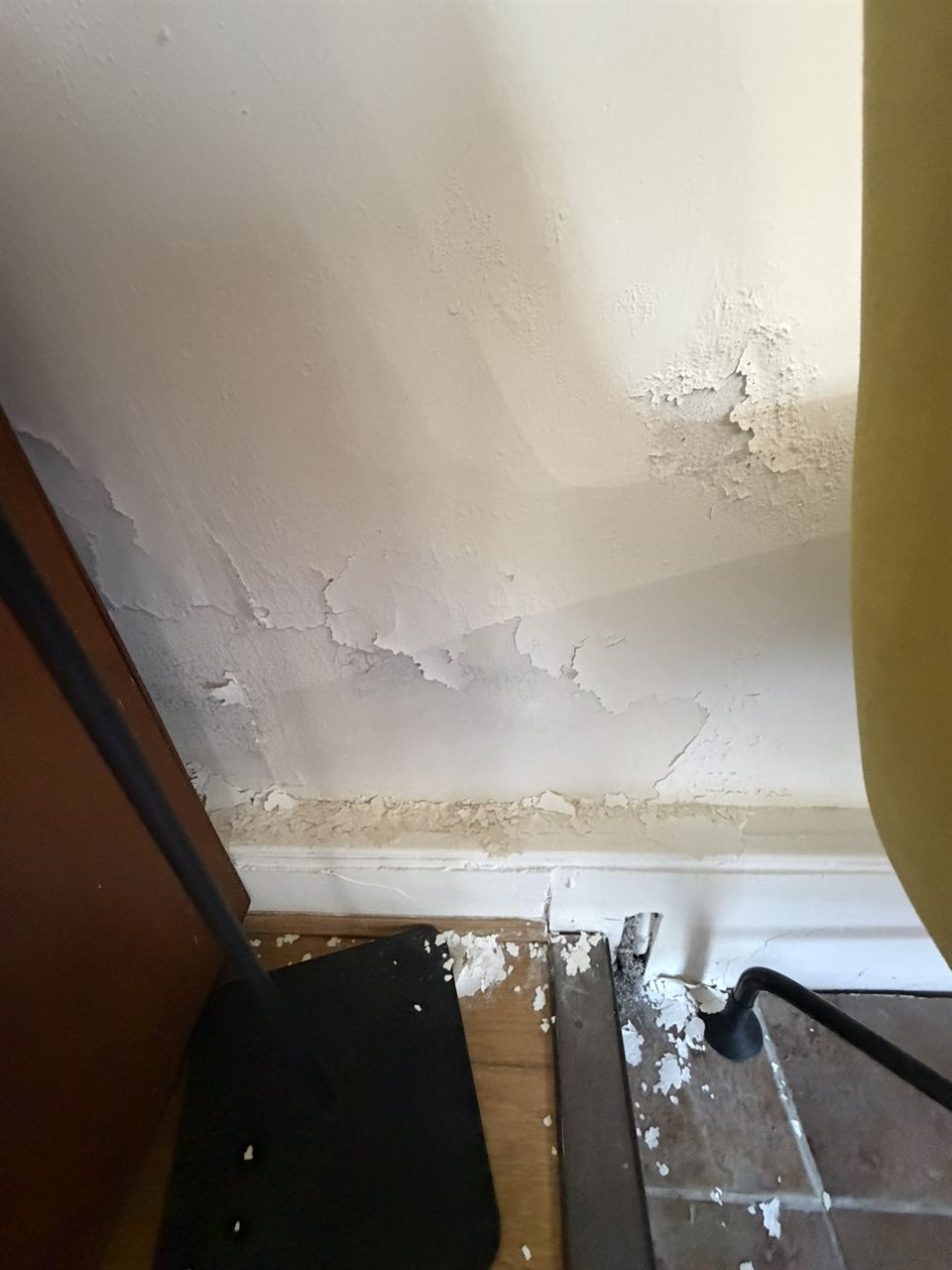
Rising damp is groundwater drawn up through brick or stone walls by capillary action. It is genuinely less common than is often claimed, and it is frequently confused with condensation or penetrating damp, so it should always be confirmed by testing rather than assumed.
Typical signs:
- A tide mark low down on the wall, usually no higher than about a metre
- Flaking paint, crumbling plaster and white salt deposits
- Damp or decaying skirting boards
 Enlarge photo
A salt test checks for the hygroscopic salts that rising damp carries up from the ground. Those salts keep attracting moisture, so contaminated plaster often needs replacing even after the cause is fixed.
4. Leaks
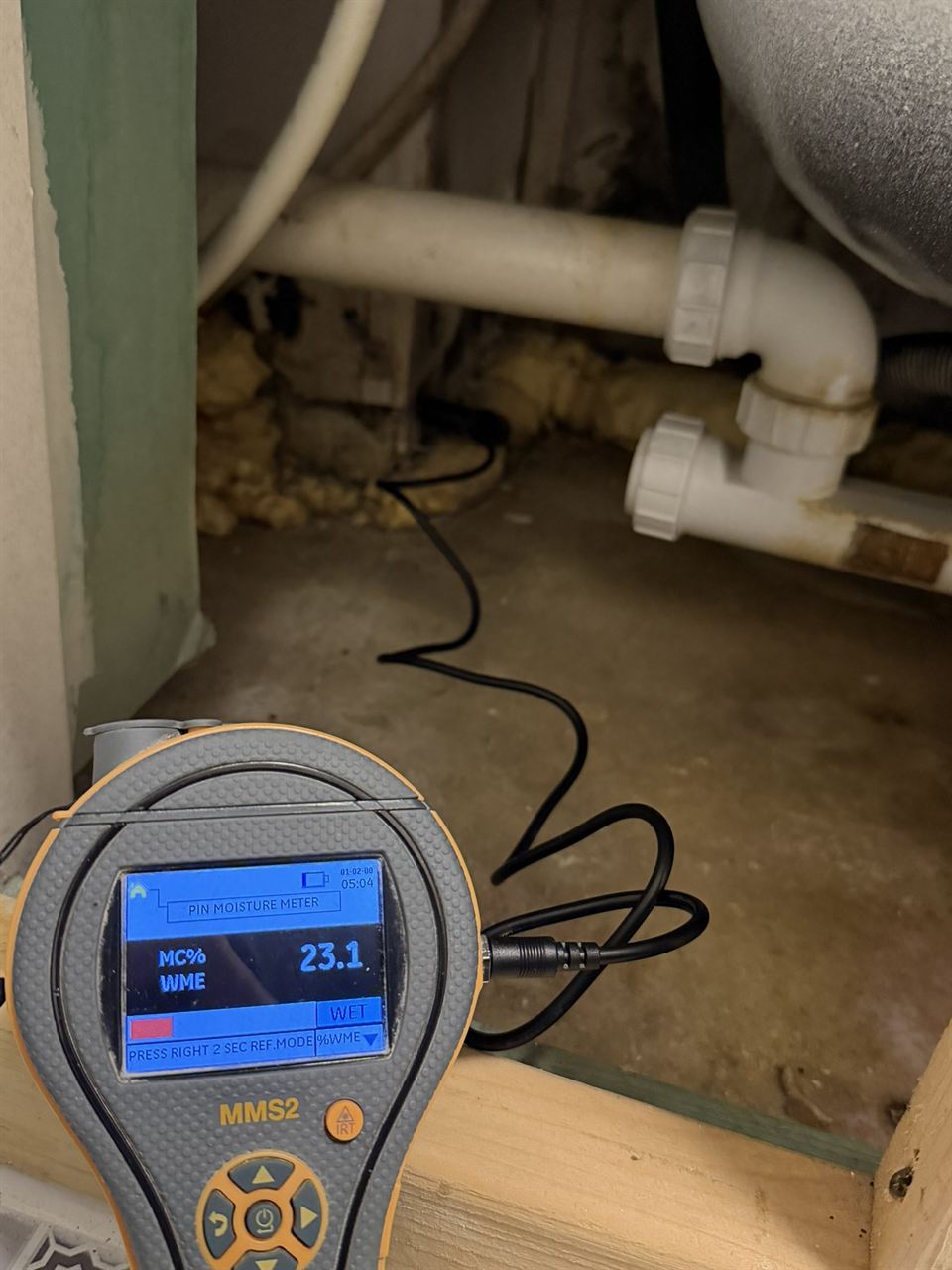
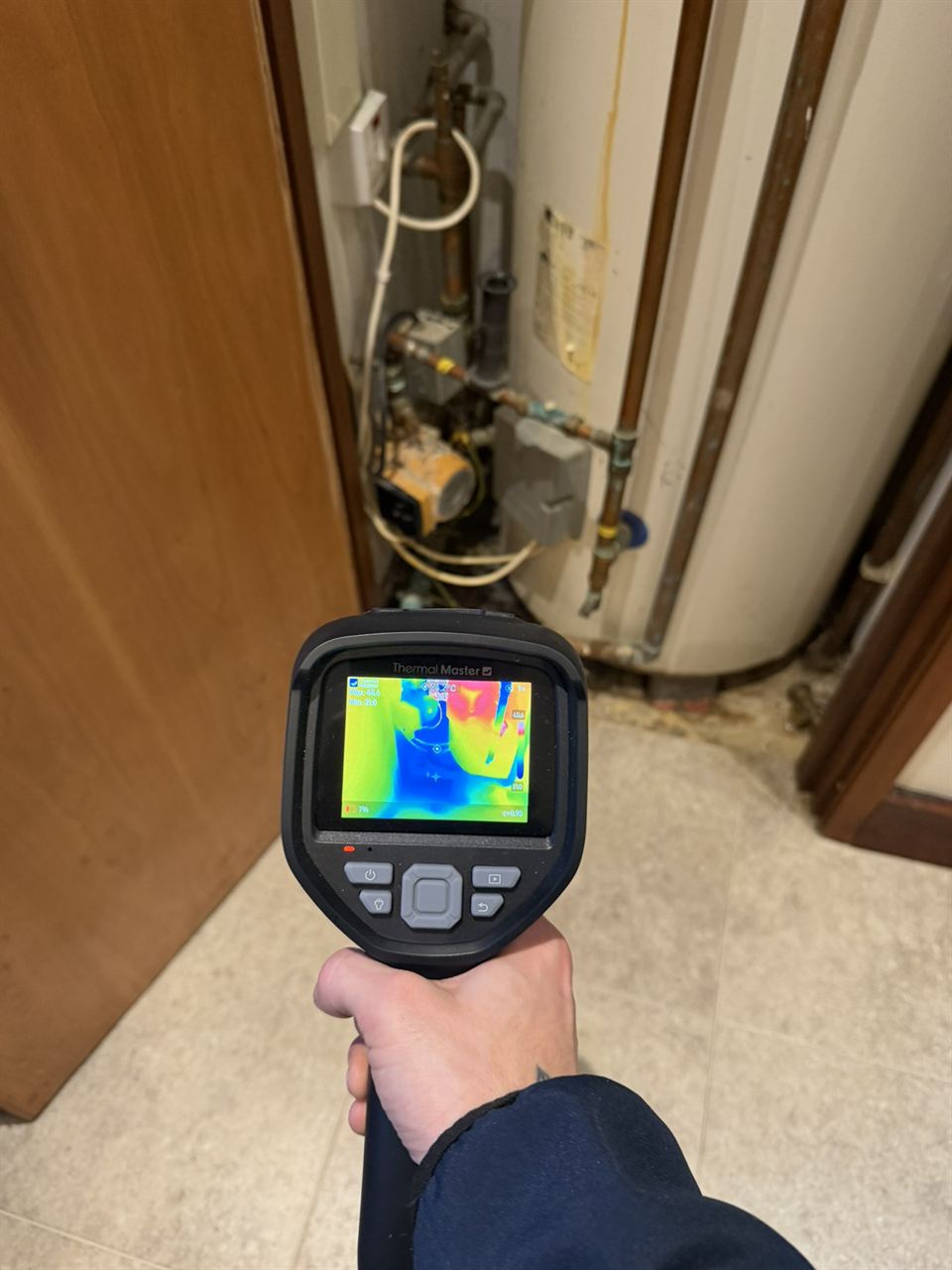
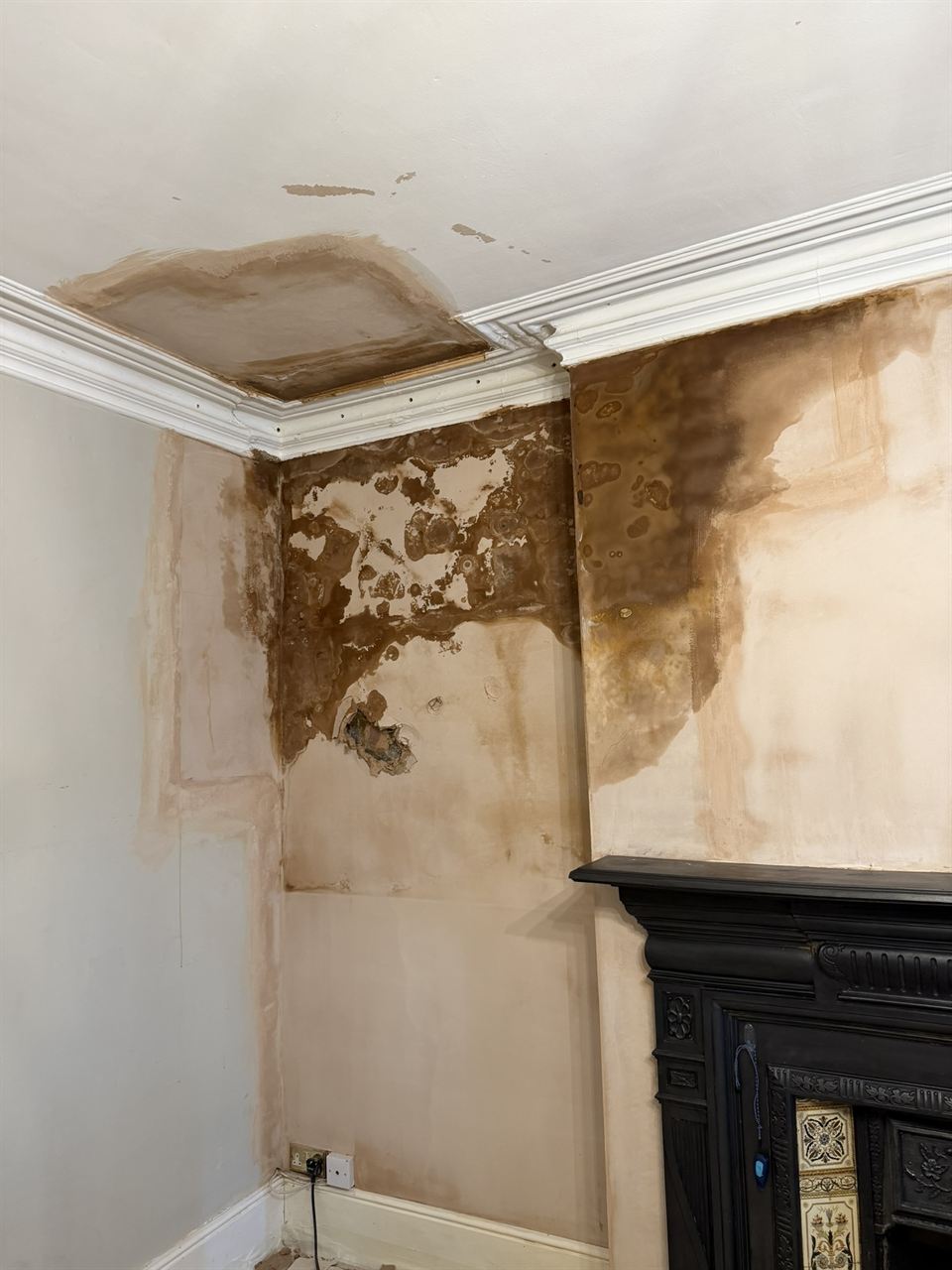
Leaking pipes, waste pipes, showers, baths, heating systems and roofs cause damp that is usually localised and can appear at any time of year.
Typical signs:
- A stain on a ceiling below a bathroom or near a pipe run
- A damp patch that keeps spreading
- Boiler pressure that keeps dropping, or a rising water bill
 Enlarge photo
Quick comparison
| Type | Where you'll see it | When it's worst |
|---|---|---|
| Condensation | Windows, corners, behind furniture | Winter, mornings |
| Penetrating damp | External walls, near gutters and downpipes | After rain |
| Rising damp | Low on ground-floor walls | All year |
| Leak | Near bathrooms, kitchens, pipes, roofs | Any time |
When to get a survey
If the cause isn't obvious, if mould keeps coming back after cleaning, or if you've been quoted for expensive damp-proofing work, a survey gives you facts before you spend money. We use moisture meters, thermal imaging, humidity readings and salt testing to identify the real cause.