Water damage assessment
Before anything is removed, we measure how far the water has spread and which materials are affected, then recommend the right solution.
After a leak or flood, speed matters. We assess the damage, remove only what's necessary and dry the structure with industrial equipment, monitored until the readings say it's done.
Water trapped behind plaster, under flooring or inside stud walls won't dry on its own, and it's exactly where mould starts. The sooner professional drying begins, the less needs replacing.
We map exactly what's wet, advise what can be dried in place and what must come out, then dry the building with industrial dehumidifiers and air movers. Every stage is recorded with readings and photos.
Before anything is removed, we measure how far the water has spread and which materials are affected, then recommend the right solution.
Saturated materials are removed locally, only what's necessary, and the structure is dried with industrial equipment until moisture readings confirm it's dry.
Milton Keynes
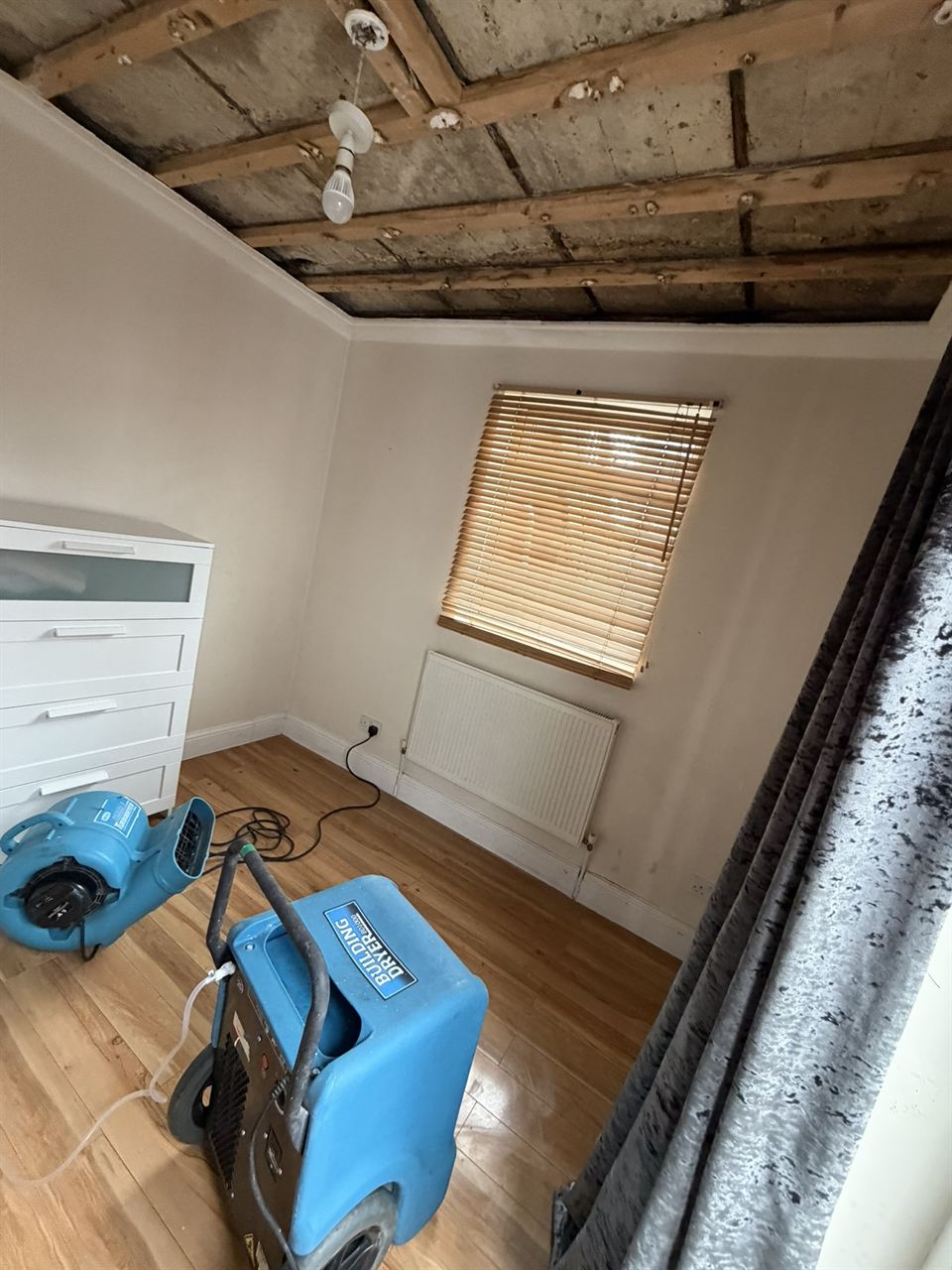
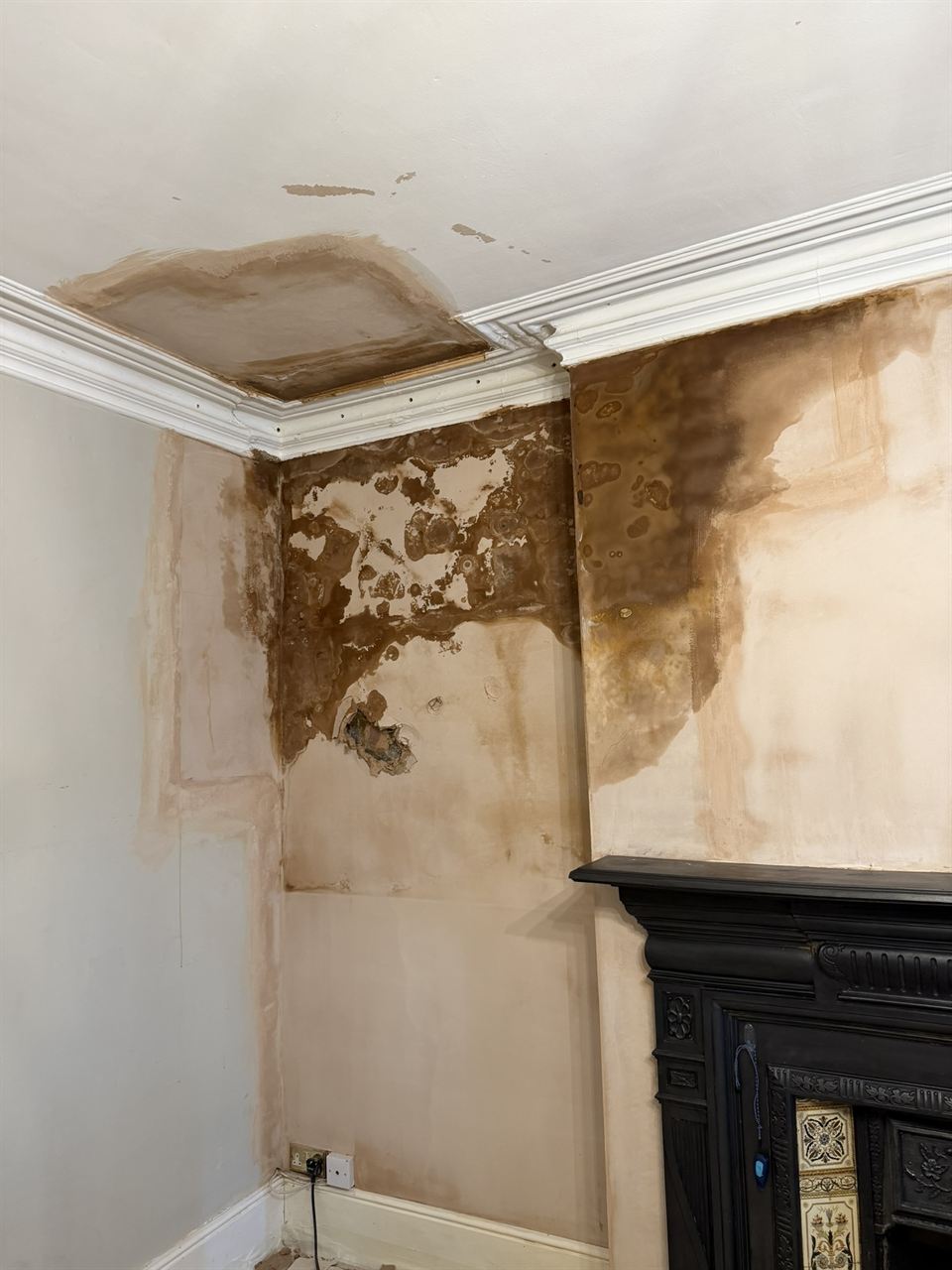
Following a leak from the roof, the saturated ceiling was stripped out and industrial drying equipment installed to dry the structure.
Water Damage DryingCentral London
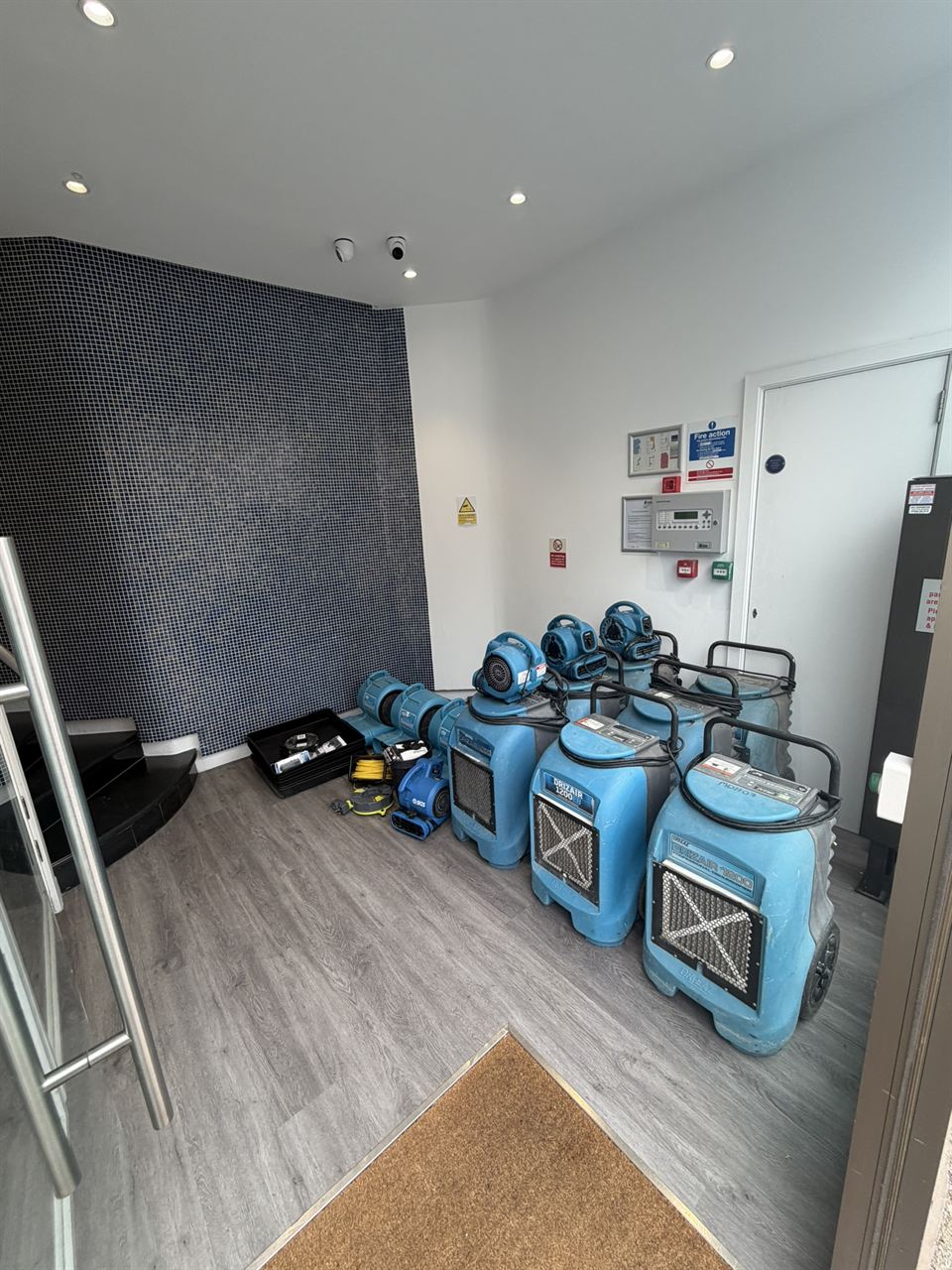
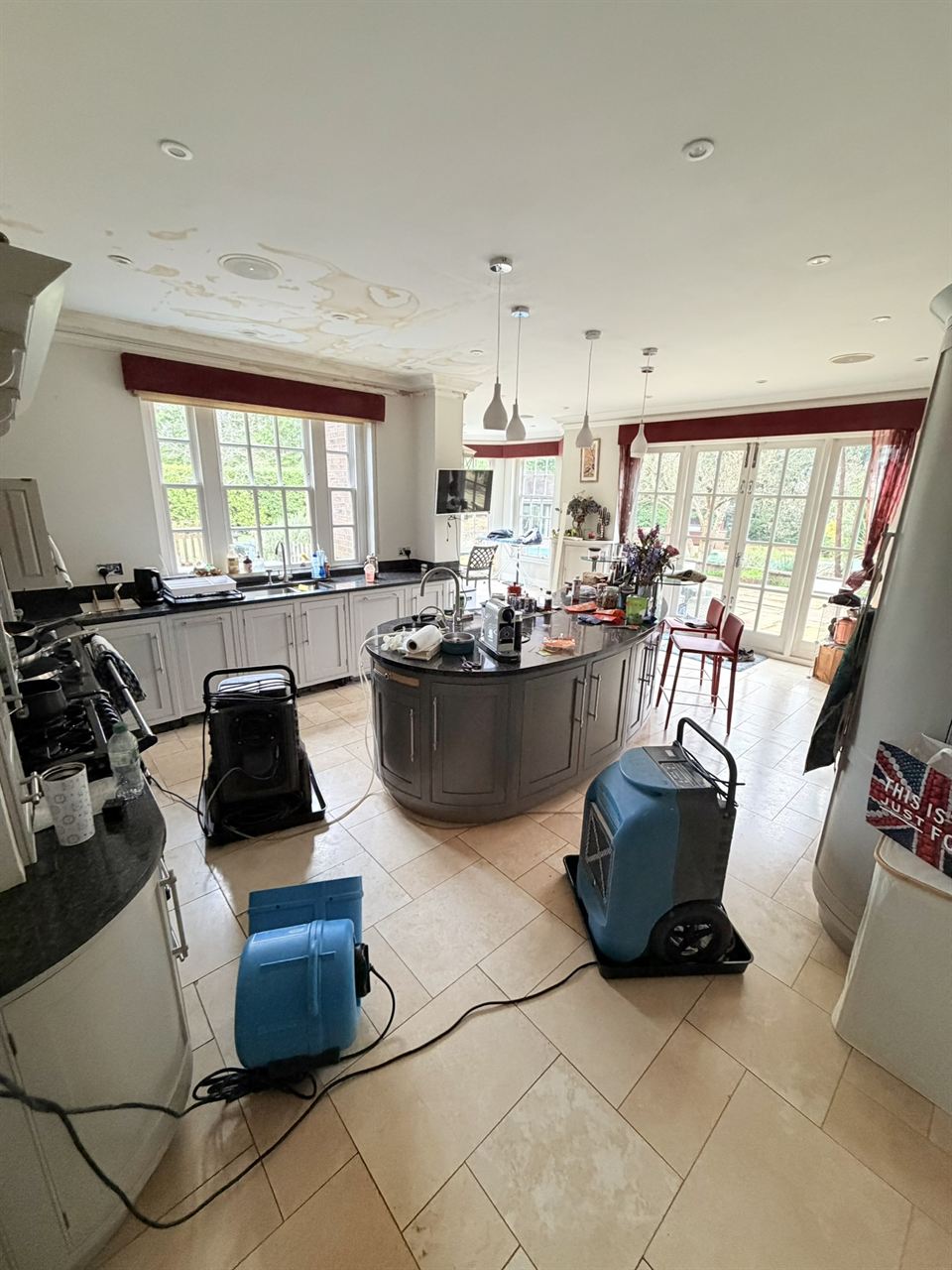
Multiple industrial dehumidifiers and air movers deployed to dry a commercial property quickly and keep downtime to a minimum.
Water Damage DryingTeddington
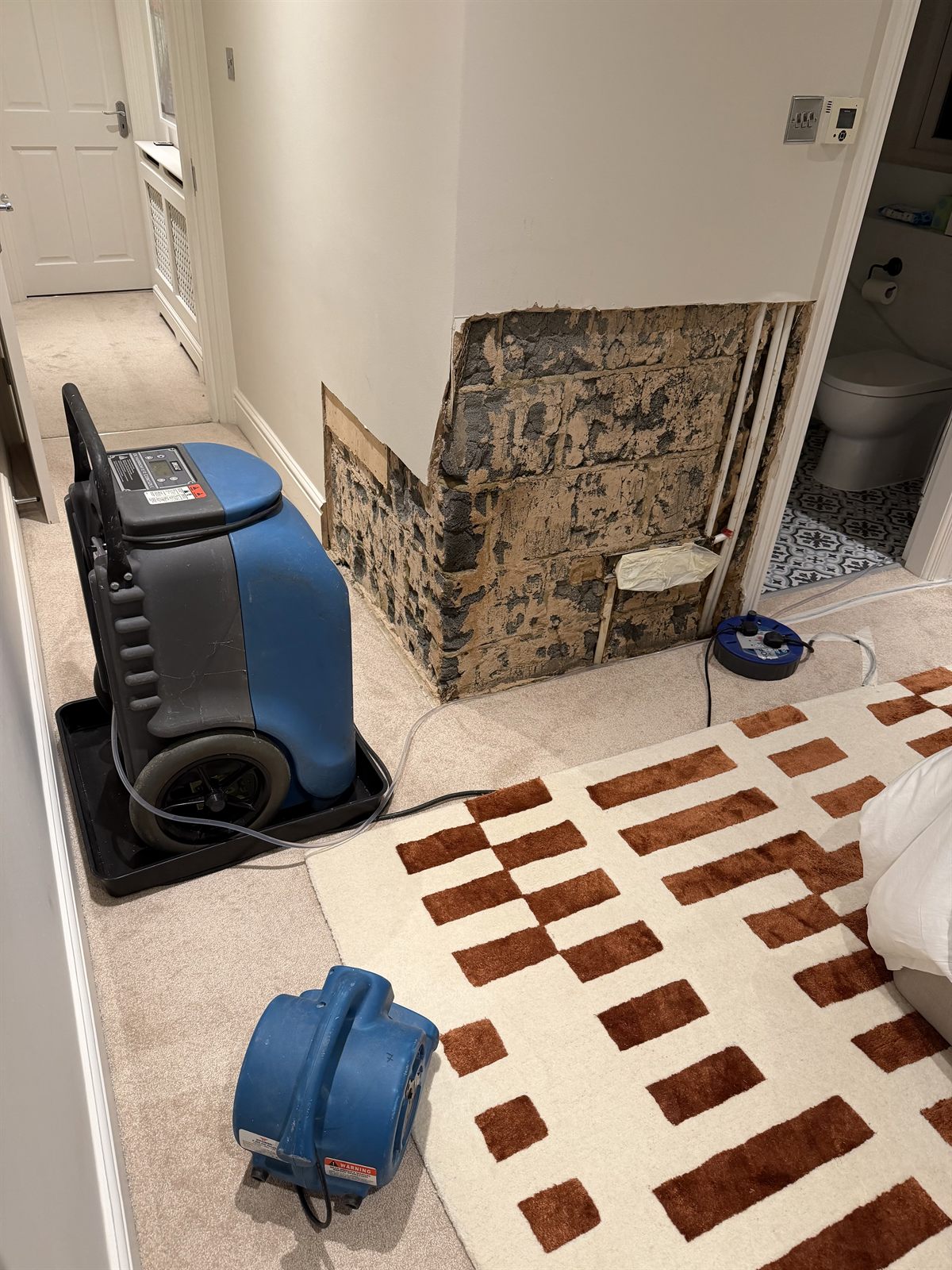
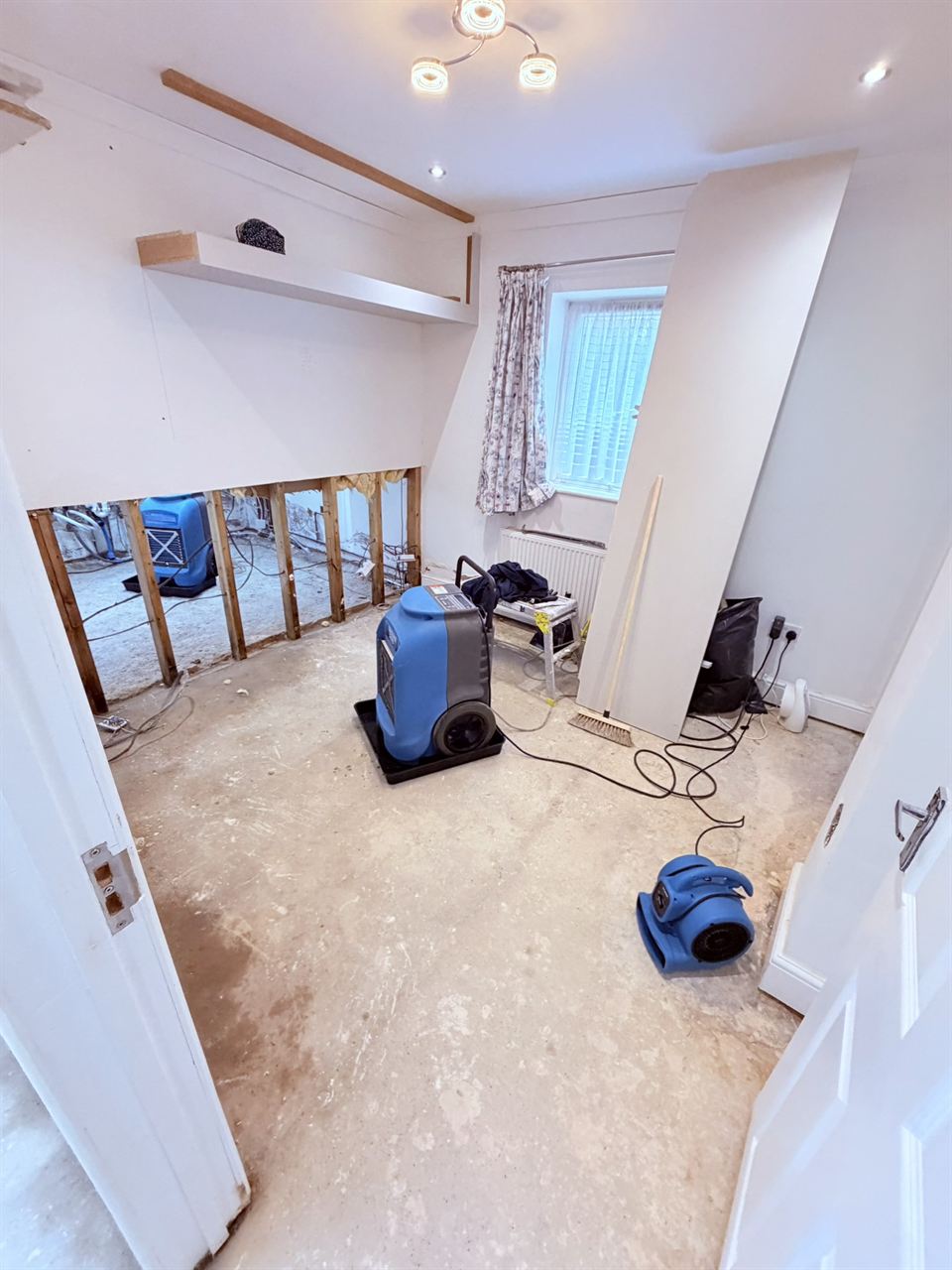
A leak from an en-suite bathroom had soaked the wall behind it. We stripped back and dried the affected area from the bedroom side, avoiding the far more costly job of removing the bathroom tiles.
Water Damage DryingA clear, four-step process, so you always know what's happening and why.
Call or WhatsApp us with a few photos. For emergencies we'll prioritise getting someone out to you.
We find the source and map the extent using moisture meters, thermal imaging and the right tests for the job.
Targeted strip out, mould treatment and industrial drying. We only remove what's necessary.
Final readings, photos and a clear report for you, your landlord or your insurer.
Every job is different. It depends on the materials affected, how long they have been wet and the conditions on site. We take regular moisture readings so drying is confirmed by the numbers, not guessed, and we'll keep you updated throughout.
Household units are designed for everyday humidity, not saturated walls and floors. Industrial dehumidifiers and air movers remove far more water, far faster, which limits secondary damage and mould.
Usually not. The equipment runs continuously and makes some noise, but most people stay at home. We'll advise you on your situation.
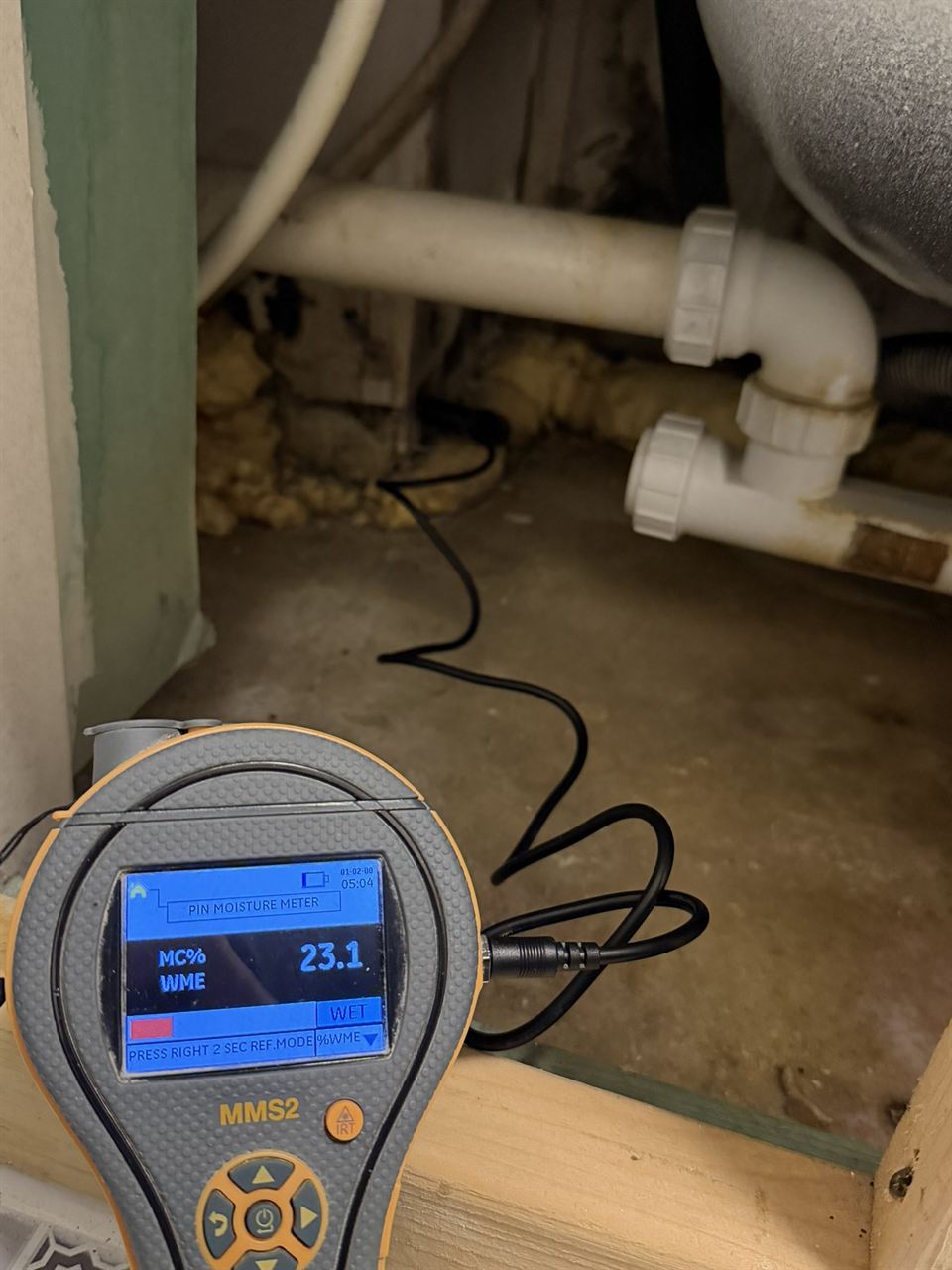
We take regular moisture readings and compare them against dry reference readings. When materials reach target levels, we confirm it in writing.
The sooner drying starts, the less damage there is. Call us 24/7 or send photos on WhatsApp.