Key points
- Stop the water and make the electrics safe first.
- Photograph everything before you move or throw anything away.
- Tell your insurer as soon as possible.
- Start professional drying quickly. Mould can begin to grow within 24 to 48 hours.
A burst pipe, a failed fitting or water pouring through a ceiling is stressful. What you do in the first few hours makes a big difference to how much damage is done and how smoothly an insurance claim goes.
1. Stop the water
Turn off the water at the stopcock, which is usually under the kitchen sink, though it can be in a cupboard, under the stairs or by the front door. Find yours now, before you need it. If the leak is from the heating system, turn the boiler off too.
2. Make the electrics safe
Water and electricity are a dangerous combination. If water is near sockets, light fittings or the consumer unit, switch off the affected circuits or the main switch, but only if you can reach it safely without standing in water. Don't use electrical appliances that have got wet. If in doubt, call an electrician.
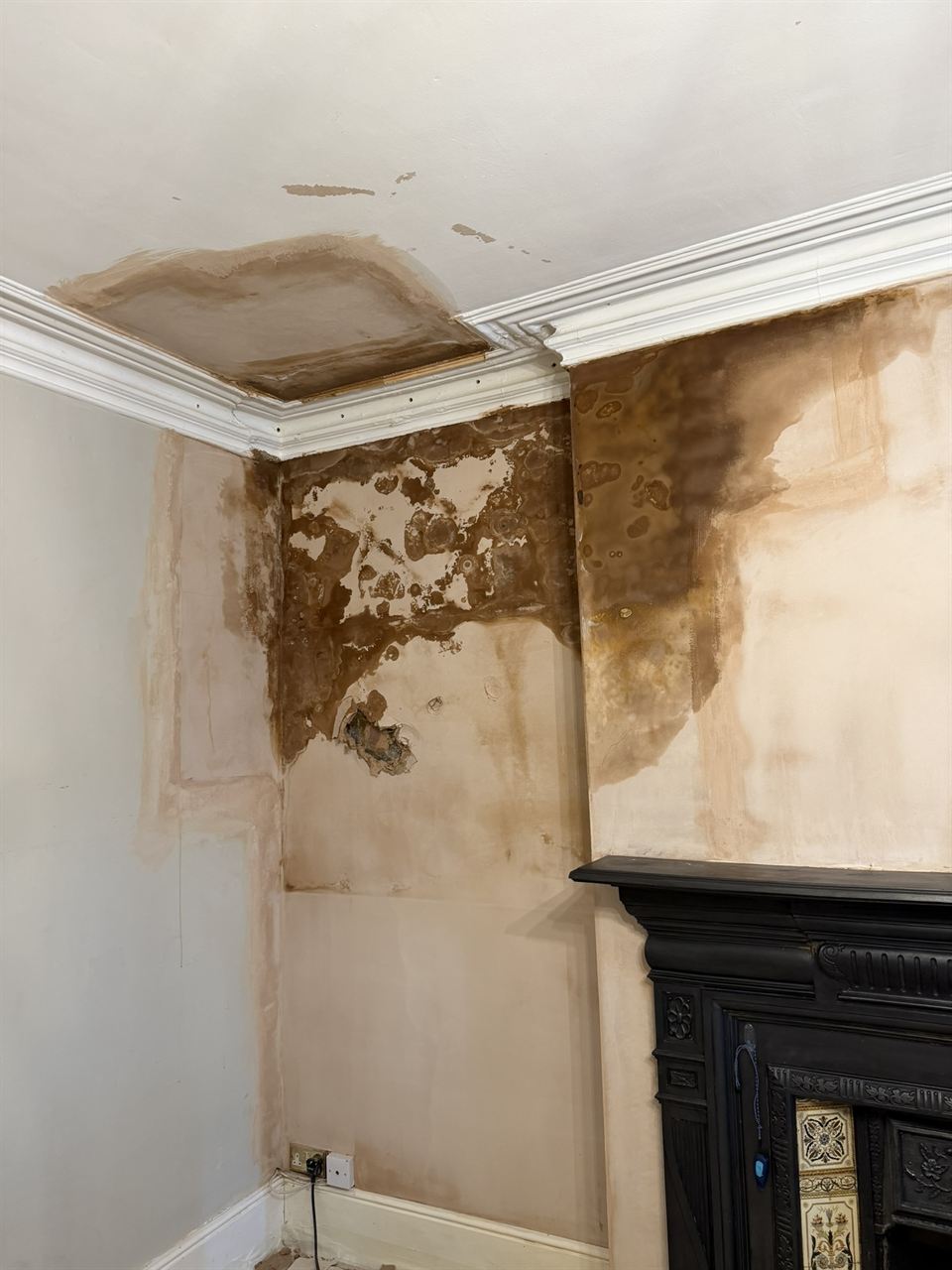
3. Photograph everything
Before you move things or start clearing up, take photos and videos of the water, the damage and any affected belongings. Don't throw damaged items away until your insurer says you can. They may want to see them.
 Enlarge photo
4. Tell your insurer
Most home insurance policies cover sudden escape of water, but you need to report it promptly. Ask what they need from you and whether they'll appoint a loss adjuster. Keep receipts for anything you spend on emergency measures.
5. Limit the damage
- Move valuables, electronics and furniture out of the wet area, or raise furniture on blocks
- Lift rugs and anything that will hold water
- Mop up standing water, but never use a household vacuum cleaner on water
- Open windows if the weather allows, to let moist air escape
If the water came from outside, such as floodwater or a drain, or from a sewage pipe, it may be contaminated. Avoid contact and leave the clean-up to professionals.
6. Start drying quickly
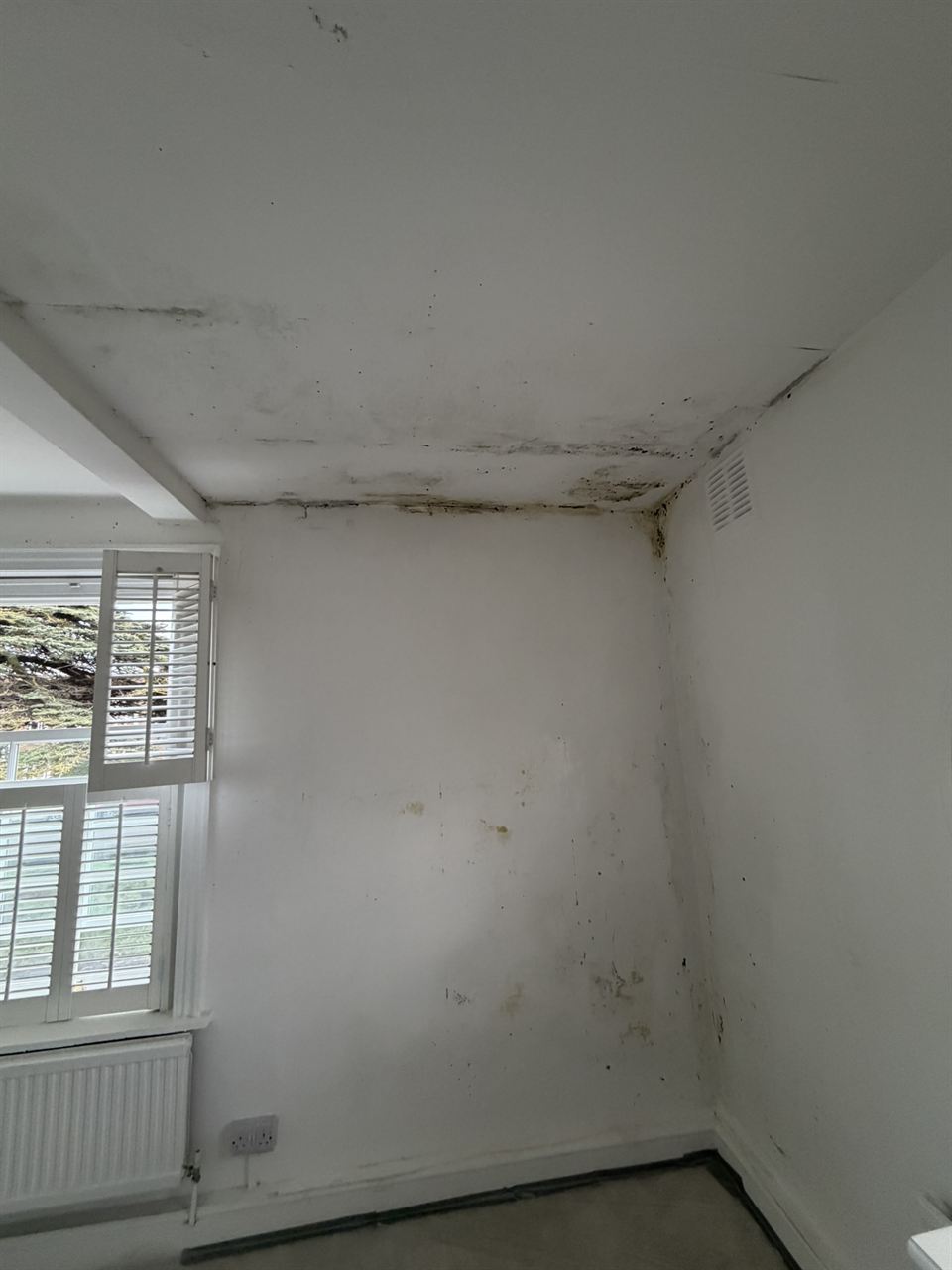
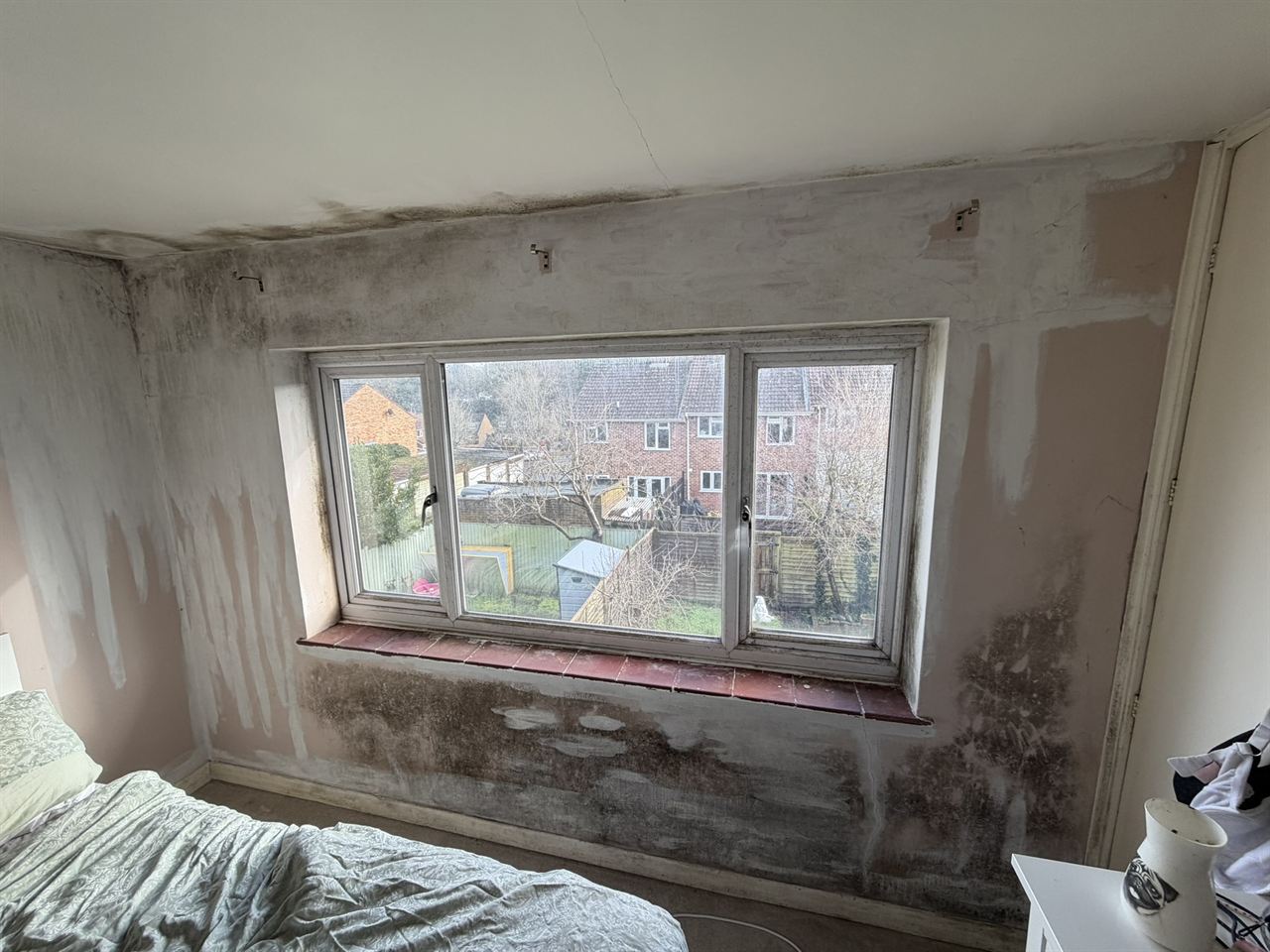
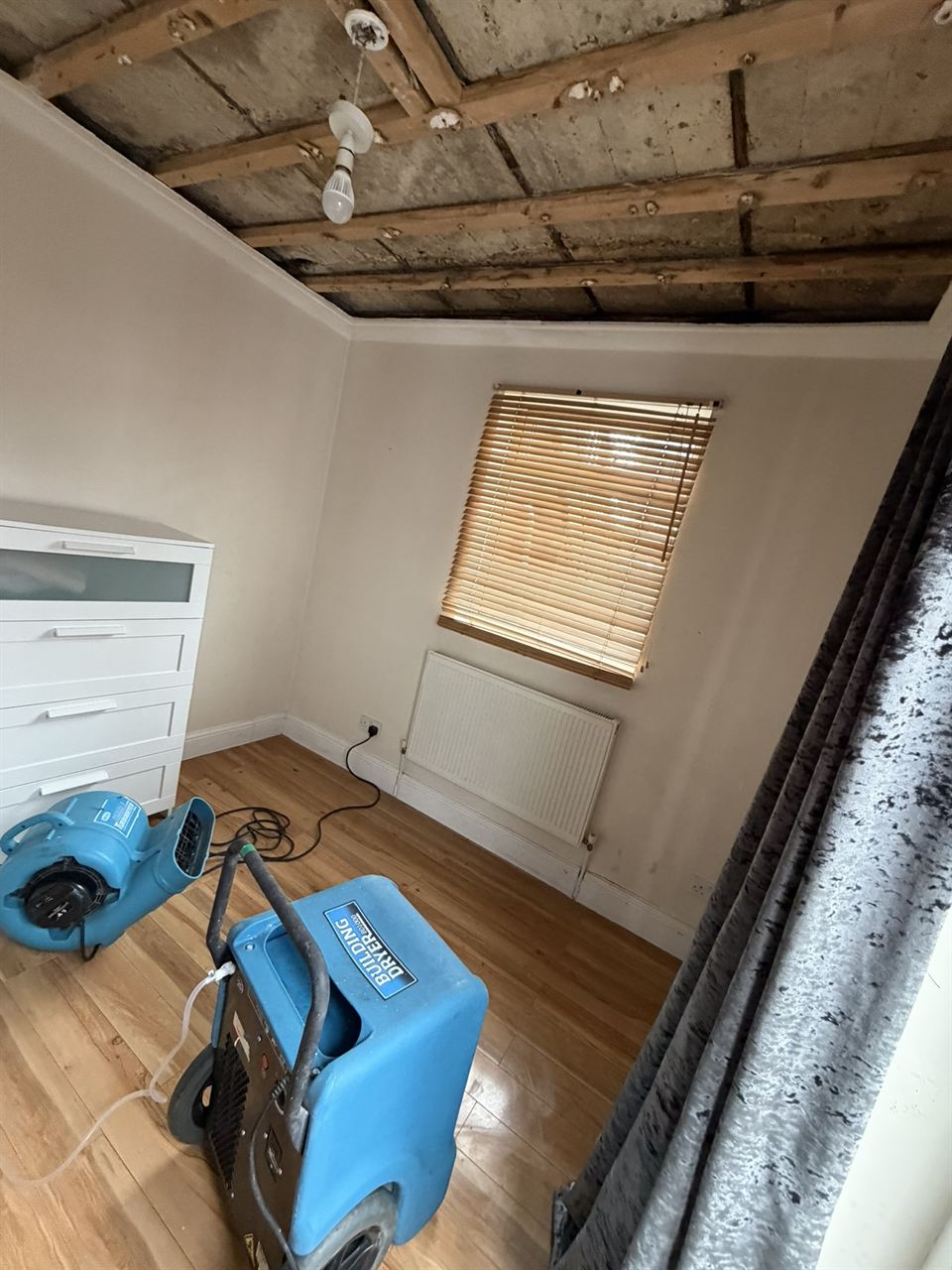
Water soaks into plaster, floorboards, insulation and stud walls, and it won't dry properly on its own. Mould can begin to grow within 24 to 48 hours in damp conditions, so the sooner professional drying starts, the less needs to be stripped out and replaced.
 Enlarge photo
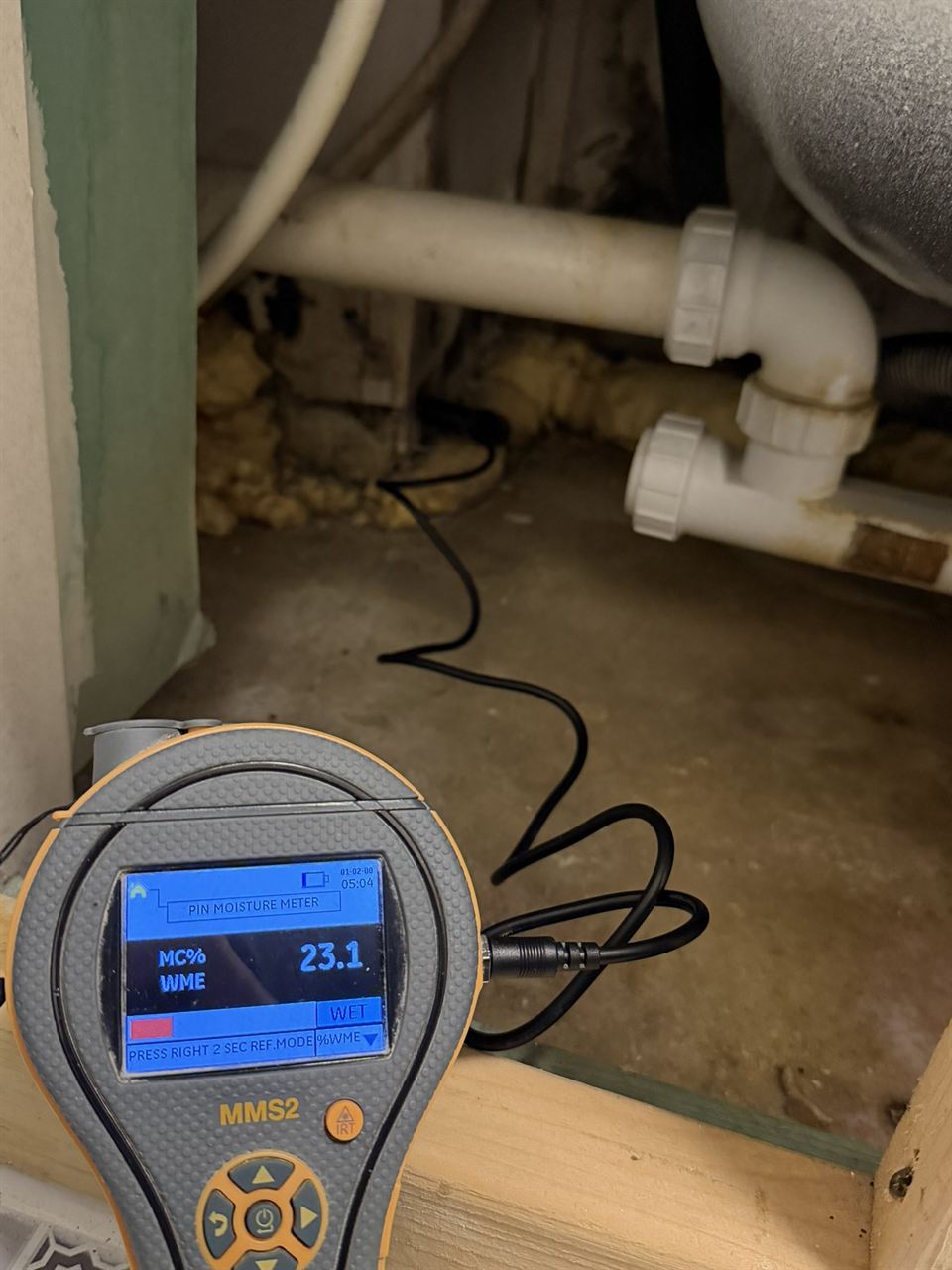
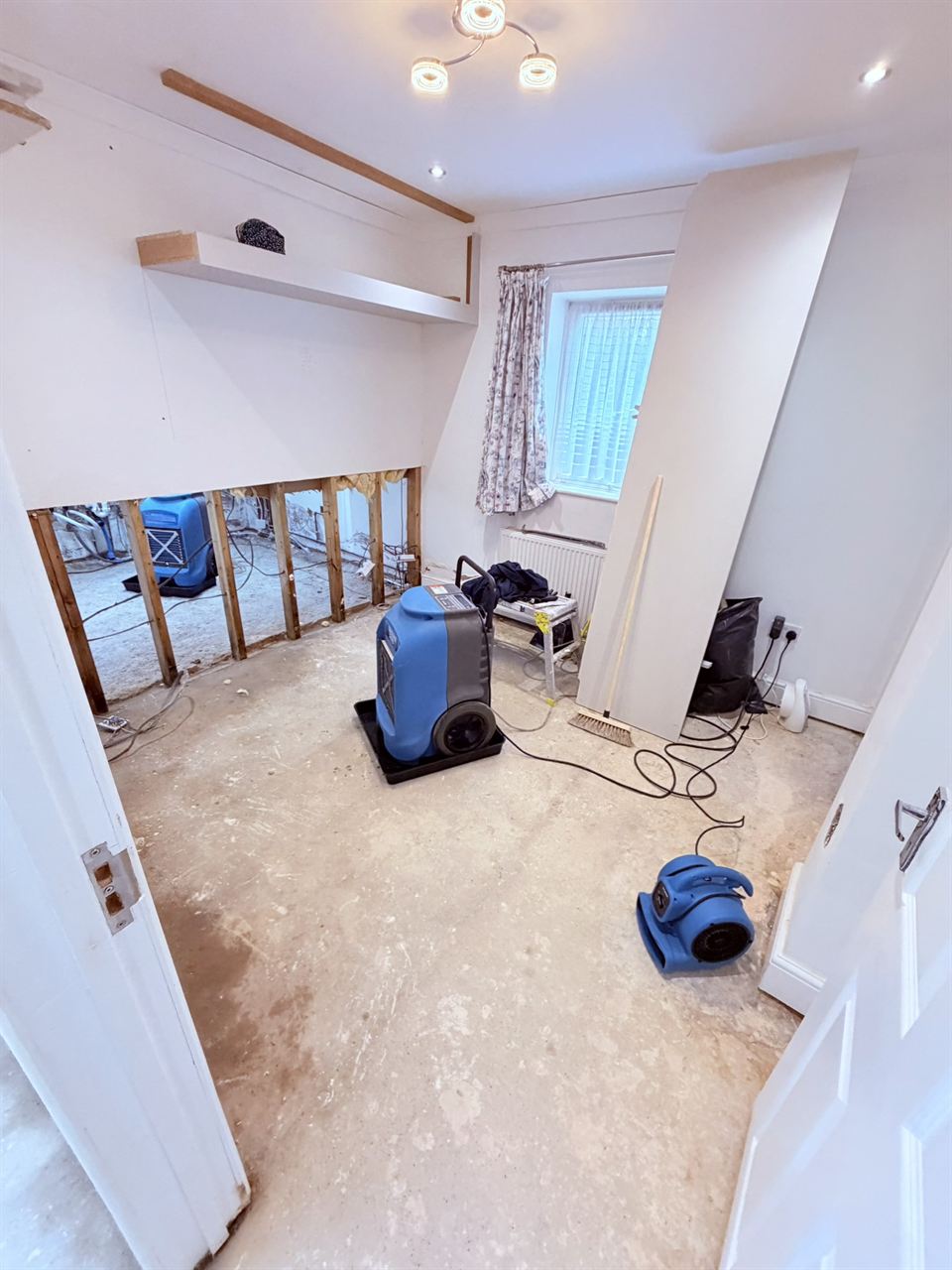
We assess what's wet, remove only what's necessary and dry the building with industrial dehumidifiers and air movers, taking readings until the materials are confirmed dry. Every stage is recorded with photos and readings for your insurer.